

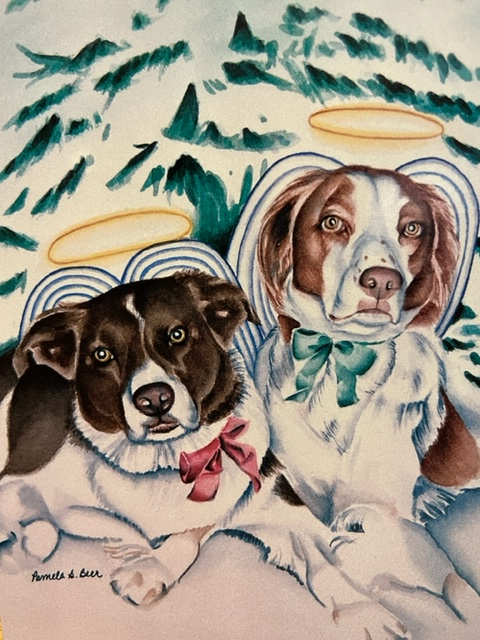
WILL THERE BE ANIMALS & PETS IN HEAVEN?
Animals, and perhaps pets, will be in heaven.
Animals and other living creatures were part of God’s perfect original design and creation of the earth and life (Genesis 1:20-28). God created animals with souls (Genesis 1:20; Revelation 8:9). Isaiah 11:6-9, 60:6-7, and 65:25 prophesy that animals and living creatures will be on the new heaven and new earth. Animals, living creatures, and all creation await and long to be glorified, renewed, transformed, and liberated from decay at the same time as the resurrection of the bodies of Christians when Jesus Christ returns. “For the creation waits in eager expectation for the children of God to be revealed.
For the creation was subjected to frustration, not by its own choice, but by the will of the one who subjected it, in hope that the creation itself will be liberated from its bondage to decay and brought into the freedom and glory of the children of God. We know that the whole creation has been groaning as in the pains of childbirth right up to the present time. Not only so, but we ourselves, who have the firstfruits of the Spirit, groan inwardly as we wait eagerly for our adoption to sonship, the redemption of our bodies” (Romans 8:19-23 NIV). Therefore, God will most likely remake earth, animals, and living creatures just as he will remake mankind as beneficiaries of Jesus Christ’s redemptive work. In the new earth, animals and living creatures, like all of God’s other creations, will declare God’s attributes and you will find joy in God by finding joy in them. If your pet animals will bring you joy, it would not be surprising if God reunited you with your past pets in heaven. Randy Alcorn, Heaven: Biblical Answers to Common Questions booklet (Carol Stream, IL: Tyndale House, 2004), 22; Randy Alcorn, Heaven (Carol Stream, IL: Tyndale House, 2004), 373-390; Hanegraaff, After Life: What You Need to Know About Heaven, the Hereafter & Near-Death Experiences (Brentwood, TN: Worthy Publishing, 2013), 44-46.