

The first century Christians learned, taught, and passed on the testimony and teachings of Jesus and the apostles within the context of an oral culture.
The New Testament of the Bible covers ministry of Jesus, the growth of the early Christian Church, and letters written or authorized by the apostles regarding Christian doctrine. The ancient Jewish and Greco-Roman cultures were oral cultures that prized memorization skills. Rabbis memorized the entire Old Testament and part of the sizeable body of oral law. Elementary education for Jewish boys from ages 5 to 13 included memorizing the Old Testament books. See Deuteronomy 6:4-9. The same applied to the New Testament writings. Michael J. Wilkins and J.P. Moreland, editors, Jesus Under Fire: Modern Scholarship Reinvents the Historical Jesus (Grand Rapids, MI: Zondervan, 1995), 32, 79-80. One of the reasons people in the first century AD relied on oral historical testimonies was widespread illiteracy: fewer than half the people in the Roman Empire could read and even fewer were able to write. Accordingly, oral histories or testimonies to truth were memorized, and shared with others during the lifetimes of eyewitnesses. This oral history transmission process was a useful form of passing down information from generation to generation. The accounts of Jesus’ life and ministry and the activities and teachings of the apostles were memorized and shared in the context of a tight-knit fellowship of Christian congregations. If one Christian incorrectly retold an aspect of these events and teachings, other Christians would quickly correct the error. In addition, during the early expansion of the Christian church, eyewitnesses of Jesus and his apostles were still alive and could refute false accounts and restate the truth about the events and teachings. Timothy Paul Jones, PhD, How We Got the Bible (Peabody, MA: Rose Publishing, 2015), 67-70.
An excellent example of a reliable oral history or testimony was documented when the apostle Paul included one of these testimonies in his letter to the Corinthians.
“I passed on to you what is most important and what had also been passed on tome-that Christ died for our sins, just as the Scriptures said. He was buried, and he was raised from the dead on the third day, as the Scriptures said. He was seen by Peter and then by the twelve apostles. After that, he was seen by more than five hundred of his followers at one time, most of them are still alive, though some have died by now. Then he was seen by James and later by all the apostles. Last of all, I saw him too, long after the others, as though I had been born at the wrong time. For I am the least of all the apostles, and I am not worthy to be called an apostle after the way I persecuted the church of God” (1 Corinthians 15:3-9 NLT).
Conservative and liberal scholars agree that the apostle Paul wrote this creed in 1 Corinthians as part of his first letter to the church in Corinth between AD 55 and 56. This was within 25 years of the resurrection of Jesus in about AD 30 or 33. Paul wrote down the testimony he received from others. He most likely received it from Peter and James in Jerusalem after his conversion (Galatians 1:18), which occurred about five years after the resurrection. This creed dates right back to at least about 8 years after the resurrection, but some scholars contend that the creed dates to about 18 months after the resurrection, or even earlier. Gary Habermas, The Historical Jesus (Joplin, MO: College Press, 1996), 152-157; Gary R. Habermas and Michael R. Licona, The Case for the Resurrection (Grand Rapids, MI: Kregal, 2003), 51-53, 221. For an in-depth scholarly discussion of the history of the early Christian belief in the resurrection, see N.T. Wright, The Resurrection of the Son of God: Christian Origins and the Question of God, Volume 3, (Minneapolis, MN: Fortress Press, 2003). This oral history or testimony confirms the New Testament eyewitness sources and documents are of very early origin.
Dating the New Testament books and letters.
Numerous New Testament books and letters were written in the 50s A.D. or earlier. These include James (AD 40-50), Galatians (A.D. 48), 1 Thessalonians (AD 50-54), 2 Thessalonians (AD 51-55), 1 Corinthians (AD 55-56), 2 Corinthians (AD 56), and Romans (AD 57-58). Three of the gospels and Acts (AD 62-64) also were written on or before AD 65: Mark (AD 55-65), Matthew (AD 60-65), and Luke (AD 60). Most scholars conclude that John was written from approximately AD 75-90, but some scholars contend that John was written earlier on or about AD 65-70, because John does not mention the destruction of the Temple in Jerusalem in AD 70. If John wrote his books after AD 70, he would have mentioned the destruction of the Temple. The remaining books of the New Testament were written in the following chronological order in or about: Ephesians (AD 60), Colossians (AD 60), Philemon (AD 60), Philippians (AD 61), 1 Timothy (AD 62-64), 1 Peter (AD 62-64), Titus (AD 64), 2 Timothy (AD 64-68), 2 Peter (AD 67), Hebrews (AD 68), Jude (65-69), 1 John (AD 65-70 or 85-90), 2 John (AD 65-70 or 90), 3 John (AD 65-70 or 90), Revelation (AD 65-70 or 95) Geisler and Turek, I Don’t Have Enough Faith to Be an Atheist, 242-243, Hank Hanegraaff, Has God Spoken? Memorable Proofs of the Bible’s Divine Inspiration (Nashville, TN: Thomas Neslon: 2011), 28-31.
The New Testament books were written by the apostles, people authorized by the apostles, or people that had encounters with Jesus.
From on or about AD 45 to 100, the apostle eyewitnesses of Jesus after his resurrection, the people authorized by the apostles, or other people who had encounters with Jesus wrote the four gospels (Matthew, Mark, Luke, and John), history of the church (Acts), letters (epistles) to other Christians, and end times prophecies (Revelation). They quoted 31 of the 39 Old Testament books. These books contained the “New Covenant” or “New Testament” that God promised the people in the Old Testament (Jeremiah 31:31-34). The accounts of Jesus remained the same as they were written, copied, and spread across the Roman Empire. Josh McDowell and Sean McDowell PhD, Evidence that Demands a Verdict: Life-Changing Truth for a Skeptical World (Nashville, TN: Thomas Nelson: 2017), 42-46.
The New Testament and Old Testament have more manuscripts and shorter time gap between the autographs and earliest manuscripts when compared to selected classical literature.
The number of complete and partial extant manuscripts of the New Testament and Old Testament books is continually increasing because not all manuscripts have been carefully cataloged and new manuscripts are being found. Scholars may have counted some manuscripts twice. However, it is safe to state that there are over 5,000 Greek New Testament manuscripts. In addition, there are over 18,130 non-Greek New Testament manuscripts. There are over 42,300 Old Testament scroll and codex manuscripts. Therefore, combining the Old and New Testament, there are more than 65,000 manuscripts. For the Greek New Testament manuscripts alone, there are more than 2.6 million pages. From a visual perspective, a stack of extant manuscripts for the average classical writer would measure about 4 feet high, while the New Testament manuscripts would measure more than 1 mile, the Old Testament would measure about 1.5 miles, and the entire Bible would measure over 2.5 miles. Josh McDowell and Sean McDowell, Evidence that Demands a Verdict, 48-55; Elijah Hixson and Peter J. Gurry, editors, Myths and Mistakes in New Testament Textual Criticism (Downers Grove, IL: IVP Academic, 2019), chapters 3 and 13. A sampling of selected classical literature that have been accepted by historians and the corresponding number of manuscripts and time gap between the autographs and the earliest manuscripts is as follows:
In or about 800 BC, Homer wrote the epic poem The Iliad, which tells of anger, war, and the final year of the Trojan war: over 1,900 manuscripts; earliest manuscript is about 415 BC; time gap of 385 years from the original autograph.
In or about 453 BC, Herodotus, a Greek historian and vivid detailed storyteller from the fifth century BC, wrote Histories of the Greco-Persian Wars: about 106 manuscripts; earliest manuscript is about AD 100; time gap of 553 years from the original autograph.
In or about 468 BC, Sophocles, a great tragic playwright of Athens, Greece, wrote over 100 dramas in the fifth century BC, but only few manuscripts remain: about 226 manuscripts; earliest manuscript is about 250 BC; time gap of 218 years from the original autograph.
In or about 400 BC, Plato, a philosopher from the fifth century BC, wrote dialogues on the fundamental concepts of truth, goodness, beauty, best city government, and a person’s self-government, wrote four groups of his works called Tetralogies: 238 manuscripts; earliest manuscript is about 250 BC; time gap of 150 years from the original autograph.
In or about 72 BC, Gaius Julius Caesar, a Roman general and statesman who led first century BC wars that spread Roman authority over the Mediterranean and Europe, wrote the Gallic Wars: over 251 manuscripts; earliest manuscript is about AD 850; time gap of 922 years from the original autograph.
In or about 21 BC, Livy (64 or 59 BC to AD 17), one of Rome’s great historians that lived until the earlier years of Jesus, wrote his History of Rome, which became a classic in his lifetime: about 473 manuscripts; earliest manuscript is about AD 350; time gap of 371 years from the original autograph.
In or about AD 100, Tacitus (AD 56 to120), a Roman orator, public official, and one of the great historians that wrote about the Roman Empire from AD 14 to 66 called Annals: 36 manuscripts; earliest manuscript is about AD 950; time gap of 850 years from the original autograph.
Based on the above sampling of comparative number of manuscripts, if skeptics reject the New Testament based on the number of manuscripts and the time gap between autograph and the earliest manuscript, they must also reject all other manuscripts of classical literature of antiquity. Josh McDowell and Sean McDowell, Evidence that Demands a Verdict, 55-59.
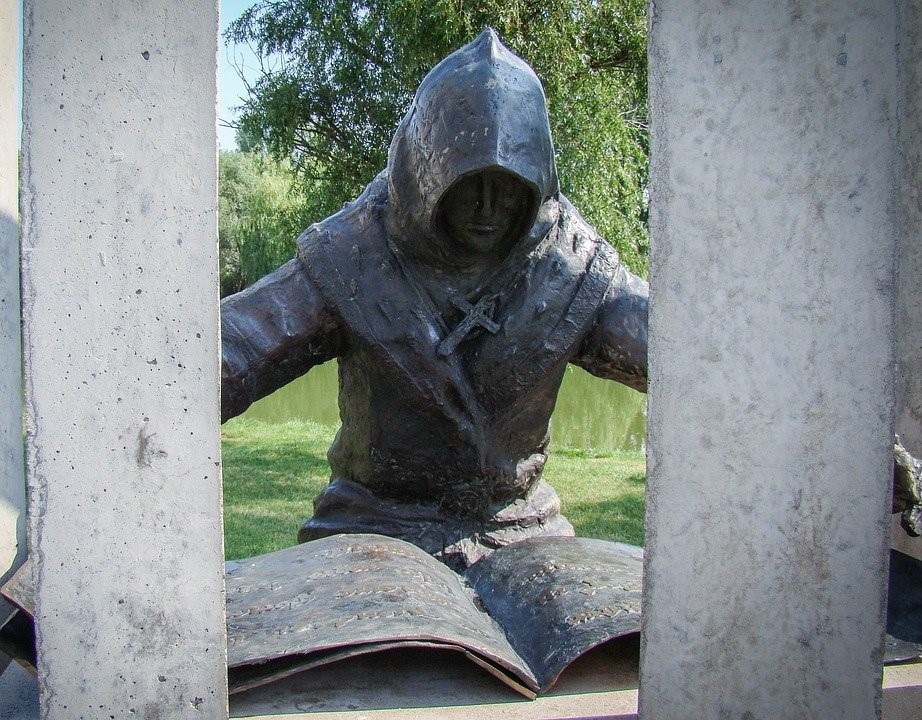
The time gap between the original New Testament autographs and the earliest extant manuscripts is approximately 50 to 250 years.
Scribe copyist statue by anonymous.
The approximate time gap of 50 to 250 years between the original New Testament autographs and the earliest extant manuscripts is relatively short when compared to other gaps for the above selected classical literature.
Paul and John referred to their writings. Paul made reference to his writings on parchment when he requested that Timothy, “When you come, bring the cloak that I left with Carpus at Troas, also the books, and above all the parchments” (2 Timothy 4:22 ESV). Also, John mentioned his writings in the final greetings closing of his second letter, “Though I have much to write to you, but I would rather not use paper and ink. Instead I hope to come to you and talk face to face, so that our joy may be complete” (2 John 1:12 ESV).
The time gap between the original New Testament autographs and the earliest extant manuscripts is approximately 50 to 250 years, depending on the manuscript. As stated in the above sampling of classical literature, the time gap between the sampling of original selected classical literature autographs and earliest extant manuscripts ranges from about 150 to 850 years. Therefore, the New Testament time gap is about one-third of the typical original selected classical literature. But even if there is a New Testament time gap of 50 to 250 years, we can still independently confirm the text of the New Testament by: 1. Papyri manuscripts of the New Testament books that were discovered in Egypt, dating as early as AD 125. 2. There are extensive quotations of the New Testament in the writings of the early church Fathers. Lutzer, Seven Reasons Why you can Trust the Bible, 76-77; Josh McDowell and Sean McDowell, Evidence that Demands a Verdict, 55-59; Hixson and Gurry, Myths and Mistakes in New Testament Textual Criticism, chapter 4.
Many of the New Testament copyists sacrificed themselves to the tedious practice of accurately copying the text.
In contrast to the Old Testament, the New Testament copyists did not utilize the same or similar systemized copyist practices. Many of them loved God and sacrificed themselves to the tedious practice of accurately copying the text. Some stood at writing desks, and others worked in extreme cold. They recognized the importance of their copyist practices and did their best to not add to or take away from the text as admonished in Deuteronomy 12:32 and Revelation 22:18-19. They engaged their copyist practices in awe of God similar to the Old Testament copyists.
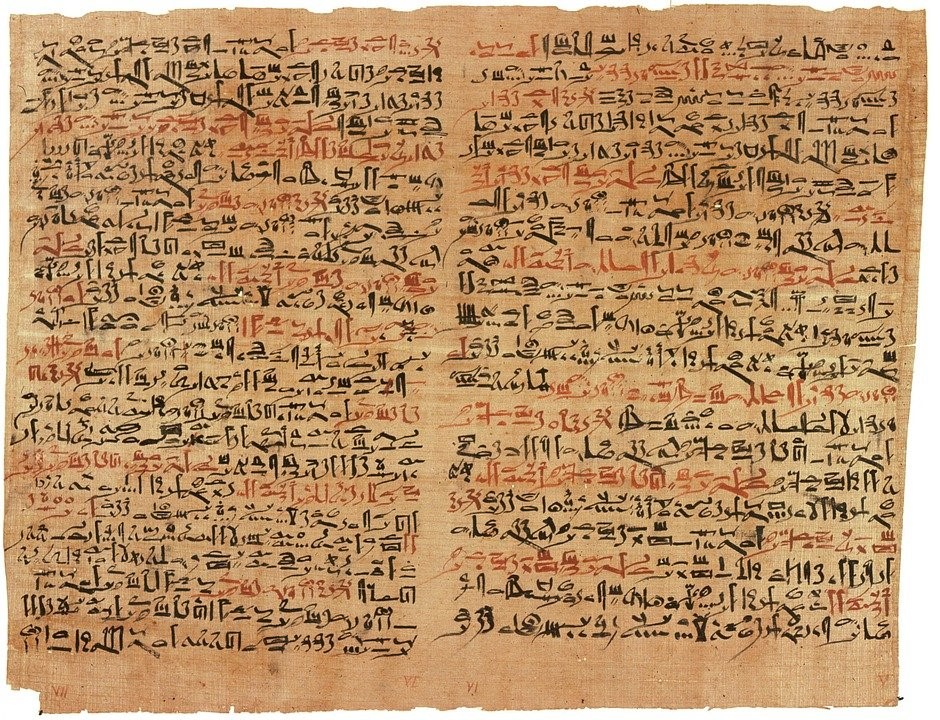
Papyrus with cuneiform script
Copyists were also hired as professional copyists that were not necessarily Christians. So they had no incentive to change or alter the text. In addition, most of the the New Testament manuscripts were in use for 150 to 200 years and some were in use for 300 to 400 years. There was overlap between the manuscripts to ensure the new manuscripts could be checked against old manuscripts. The papyrus manuscripts were named as “P” for papyrus followed by the number of the manuscript. Examples of early manuscripts that overlap each other and the original autographs are the following. The P45 manuscript of the four Gospels date to AD 200 to 250. The P66 manuscript of 156 pages of parts of the Gospel of John was written between AD 100 and 200. The P75 manuscript of the end of the Gospel of Luke and the beginning of the Gospel of John dates back to AD 175 to 225 and reads nearly identical to the Codex Vaticanus which was written about 100 years after P75. These manuscripts were most likely written while the original autographs of the four Gospels were still in use. Dr. Craig Evans, Dr. Dan Wallace, narrated by John Rhys-Davies, Can We Trust the Bible? Fragments of Truth (Faithlife Films, 2018); compare to Hixson and Gurry, Myths and Mistakes in New Testament Textual Criticism, chapters 7, 8, and 11.
There were copyist mistakes in the manuscripts, but we have so many manuscripts by which textual critics can sort out the manuscript copying errors, even apart from context and common sense. Hanegraaff, Has God Spoken?, 12-13. For example, according to New Testament textual criticism scholar, Peter Gurry, John 18 is about 800 words in Greek and we have almost 1,700 complete manuscripts. This calculates to 1,360,000 translated words. In John 18, there are about 3,000 reported variants. Therefore, 1,360,000 translated words divided by 3,000 variants equals about 1 variant per 453 translated words or 0.22% variant per translated word. Gurry reports there are about 500,000 variants not counting spelling differences in the Greek manuscripts in the New Testament. The New Testament is about 138,000 words long. As illustrated above, the relevant question to ask to put the variants in proper context is, “How many variants are there per words copied by the scribes?” We have so many variants because we have so many manuscript copies. We can determine and correct the variants by comparing the manuscript in question to other accurate manuscripts. Hixon and Gurry, Myths and Mistakes in New Testament Textual Criticism, chapter 10; see also to Think Biblically podcast with Peter Gurry, December 11, 2020, https://www.biola.edu/blogs/think-biblically/2020/trust-copying-of-bible
Types of writing and the most important New Testament Manuscripts.
There were two types of written texts for the New Testament. Uncials text is more of a formal handwriting characterized by deliberate and carefully written letters similar to capital letters. There were no spaces or punctuation. The most important New Testament manuscripts are the uncial codices that first appeared in the fourth and later centuries through about AD 800. Uncials were in widespread use through about AD 800. Miniscule writing is more like cursive lower case letters and was used to produce manuscripts beginning after AD 800. A pointed reed was cut to a flat-chisel shape or a quill feather from a large bird was used to make pens. The ink was typically made out of a compound of charcoal, gum, and water. Higher quality ink came from gallnut on various oak trees, which formed as a slight nodule or blister on the tree in response to wasp stings on a tree to lay its larvae. Josh McDowell and Sean McDowell, Evidence That Demands a Verdict, 22-24. A sampling of the most important New Testament manuscripts is as follows:

Illustration from 1908 Chambers’ Twentieth Century.
Image from Wikimedia Commons.
.
P52 John Rylands Manuscript fragment.
Image from Wikimedia
P52 John Rylands Manuscript (AD 130). The P52 John Rylands Manuscript is a fragment of 5 verses of the John 18 that is about the size of a credit card with writing on both sides. It is the oldest extant fragment of the New Testament dating to about AD 130. Since John was written in Asia Minor before AD 100 and P52 was found in Egypt. it most likely is a first generation manuscript of the Gospel of John. P52 is located in the John Rylands Library of Manchester, England.
The Diatessaron (AD 170). Tatian, an Assyrian early theologian, wrote the Diatessaron in or about AD 170 in Syria. It is an early manuscript that harmonizes the gospels into one account and resolves any apparent inconsistencies between the gospels. It was widely used by early Syriac Christians. Therefore, Tatian must have had and examined manuscripts of the four gospels that were even closer in time to the original autographs. The extant copies of it are translations from it. It was cataloged in 1952 in the library of the Coptic monastery in Egypt.
P66, P72, and 75 Bodmer Papyrus II (AD 150-225). The Bodmer Papyrus II was purchased from a dealer in Egypt in the 1950s and 1960s. It dates between AD 150 and 200 and contains most of the Gospel of John (P66), the earliest copy of Jude and two epistles/letters of Peter (P75), and a single-quire codex of Luke and John (P75), which dates between AD 175 and 225, and is the earliest known copy of the Gospel of Luke and Gospel of John. It is located in the Bodmer Library of World Literature in Cologny, near Geneva, in Switzerland.
Chester Beatty Papyri (AD 200). The Chester Beatty Papyri manuscripts were purchased in the 1930s from a dealer in Egypt and contain papyrus codices, three of which contain major portions of the New Testament. These manuscripts significantly reduced the gap between the earlier found manuscripts and the traditional dates of the New Testament. They are located in the Chester Beatty Museum in Dublin, Ireland.
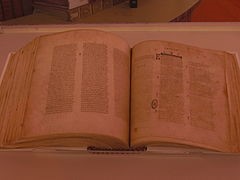
Codex Vaticanus photo by Leszek Janczuk. Image from
Wikimedia Commons
Codex Vaticanus (AD 325-350). Written between AD 325 to 350 in uncials, the Codex Vaticanus was one of the 50 manuscripts of the Bible authorized almost immediately after the conversion of Constantine at the Council of Nicea in AD 325. It is a Greek text of almost the entire Old and New Testaments. This is the most accurate manuscript that we have of all the New Testament manuscripts. It is located in the Vatican Library in Rome, Italy.
Codex Sinaiticus (AD 350). Written in or about AD 350 in uncials, The Codex Sinaiticus is a manuscript of most of the Old and almost all of the New Testaments. Its gospel text reliability is considered second only to the Codex Vaticanus. Its reliability for Acts is equal to the Codex Vaticanus, and its reliability is ranked first for the epistles. The Codex Alexandrinus’ reliability is better for Revelation. In 1859, the Codex Sinaticus was discovered in a monastery near Mount Sinai in Egypt. Most of the manuscript is located in the British Library in London, England. A few pages are located in St. Catherine’s Monastery in Egypt and libraries in Germany and Russia.
Codex Alexandrinus (AD 400). Written in or about AD 400 in Egypt, the Codex Alexandrinus is a near complete Geek manuscript of the Old and New Testament.
Josh McDowell and Sean McDowell, Evidence That Demands a Verdict, 60-63.
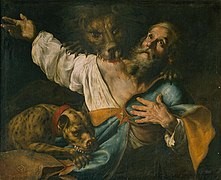
Ignatius of Antioch from the Neapolitan School of Painting,
possibly by Cesare Fracanzano (1605-1651). Image from
Wikimedia Commons.
There are extensive quotations of the New Testament in the writings of the early church Fathers.
Between AD 100 to 400, the early Christian church fathers quoted the New Testament approximately 36,000 times. We can reproduce a substantial portion of the original text and reconstruct at least an outline of the New Testament and many of its essential details. Josh McDowell and Sean McDowell, Evidence that Demands a Verdict, 64-66; Hixson and Gurry, Myths and Mistakes in New Testament Textual Criticism, chapter 12.
Clement of Rome (AD 95). Known as a disciple of the apostles, the apostle Peter appointed Clement as a leader of the church in Rome in the first century. He quoted from the Synoptic Gospels, Acts, 1 Corinthians, Titus, Hebrews, and 1 Peter. Josh Mc Dowell and Sean McDowell, Evidence That Demands a Verdict, 64.
Ignatius (AD 110). Ignatius was the third bishop of Antioch. Many scholars opine that Peter was the first bishop of Antioch. Ignatius was a student of John and was martyred. His seven epistles/letters quoted Matthew, John, Acts, Romans, 1 Corinthians, Galatians, Ephesians, Philippians, Colossians, 1 and 2 Thessalonians, 1 and 2 Timothy, James, and 1 Peter. Josh McDowell and Sean McDowell, Evidence That Demands a Verdict, 64.
Polycarp (AD 70-156). Polycarp was a disciple of John and became the Bishop of Smyrna (modern-day Ismir, Turkey). He quoted Romans, 1 and 2 Corinthians, Galatians, Colossians, 1 Timothy, Hebrews, 1 Peter, 1 and 2 John and the Old Testament books of Psalms, Proverbs, and Isaiah. Josh McDowell and Sean McDowell, Evidence That Demands a Verdict, 64-65.
Clement of Alexandria (AD 150-212). Clement quoted from 24 of the 27 books of the New Testament 2,496 times. He defended Christianity with an emphasis on faith and Greek philosophy. Josh Mc Dowell and Sean McDowell, Evidence That Demands a Verdict, 65; Norman L. Geisler, Baker Encyclopedia of Christian Apologetics, (Grand Rapids, MI: Baker, 2000), 156-157.
Justin Martyr (AD 100-164). Justin Martyr was born of pagan parents of Samaria, Israel. He studied various philosophies before becoming a Christian in AD 130. He defended Christianity with faith and reason. He argued that “the resurrection of the flesh was possible” and that the resurrection was both spiritual and physical. He opposed the heretic Marcion and was later martyred. His Apologies (defenses of faith) either quote or allude to the four New Testament gospels, as well as 1 Corinthians and Hebrews, and to the Old Testament books of Genesis, Deuteronomy, Isaiah, and Malachi. Josh McDowell and Sean McDowell, Evidence that Demands a Verdict, 65; Geisler, Baker Encyclopedia of Christian Apologetics, 395-396.
Tertullian (AD 160-220). Tertullian was a presbyter/elder/priest and early defender of the Christian faith from Carthage, North Africa. He was educated in law and converted to Christianity in about AD 190. He has been called “the father of Latin Christianity” and “the founder of Western Christianity.” He is the first to write the term “trinity” in Latin (trinitas). He emphasized faith and human reason in defense of Christianity. Josh McDowell and Sean McDowell, Evidence that Demands a Verdict, 65; Geisler, Baker Encyclopedia of Christian Apologetics, 721-722.
Hippolytus (AD 170-235). Hippolytus was a presbyter/elder/priest of Rome. He was one of the most significant theologians of the third century. He is known today for promoting orthodox Christology and refuting bad doctrine in the church at Rome. His voluminous writings quoted the Bible more than 1,300 times and discussed topics, including but not limited to, exegesis (interpreting the Bible text based on what it states and the author’s intention), apologetics, and ecclesiastical law. Josh Mc Dowell and Sean McDowell, Evidence that Demands a Verdict, 64-65; https://www.gotquestions.org/Hippolytus-of-Rome.html.
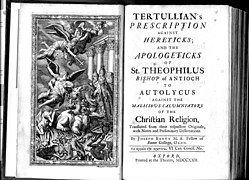
Tertullian’s Prescription Against Hereticks, Oxford (1722),
written by Joseph Betty. Image from Wikimedia Commons.
Origen (AD 185-254). Origen was an early church apologist or defender of Christianity from Alexandria, Egypt. He wrote over 6,000 works and listed more than 18,000 New Testament quotes and defended the basic inspiration and historicity of the Bible. However, he was heavily influenced by Platonic and Gnostic (superior knowledge) thought. He denied the inerrancy of the Bible in practice. Contrary to Christianity, he taught universalism, the existence of the soul before a person was created, Jesus Christ was inferior to God the Father, and denied the physical nature of the resurrection body. Josh McDowell and Sean McDowell, Evidence that Demands a Verdict, 66; Geisler, Baker Encyclopedia of Christian Apologetics, 565-567.
Cyprian (AD 258). Cypian was a bishop of Carthage. He quoted the Old Testament about 740 times and quoted the New Testament 1,030 times. Josh McDowell and Sean Mc Dowell, Evidence that Demands a Verdict, 65-66.
Other early church fathers. Other early church fathers who quoted from the New Testament include: Barnabus (AD 70), Hernias (AD 95), Taitian (AD 170), and Irenaeus (AD170). Josh McDowell and Sean McDowell, Evidence that Demands a Verdict, 65.
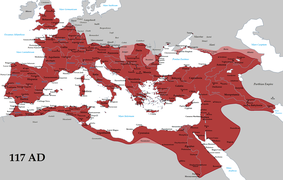
The New Testament letters were copied, circulated, and kept in church
libraries throughout the Roman Empire (in red and its clients in pink)
under Trajan in 117 AD. Image from Wikimedia Commons.
How were the New Testament books/epistles/letters written?
In the middle of the first century, certain apostles (commissioned eyewitnesses of the resurrection) of Jesus started to write and circulate the New Testament books/epistles/letters. The apostles dictated to secretaries/scribes who actually wrote the letters, and the letters were reviewed and sometimes signed by the apostles (1 Corinthians 16:21; Galatians 6:11; Colossians 4:18; 2 Thessalonians 3:17). They initially wrote these letters on scrolls, but then later in the first or early second century, they began to write them on sheets of papyrus that were bound in the form of a book, called a “codex.” These codices allowed Christians to preserve all of letters from the same author into a single codex to easily locate them by author. The Holy Spirit inspired the apostolic authors and safeguarded the words of the apostles and their secretaries/scribes. One of their purposes was to apply the message of Jesus in the lives of people who already knew about Jesus. Their words carried the same authority with Christians as Jesus’ own words (1 Corinthians 14:37). The four New Testament Gospels (texts that narrate the life, death, and resurrection of Jesus Christ) were written in the lifetimes of eyewitnesses that had encounters with Jesus. Jones, How We Got the Bible, 73, 77, 84-86.
After a letter was finished, a messenger delivered the letter to a local church and most likely read the letter to the church congregation. Since most Christians did not have access to their own personal copies of the letters, Christians would learn more about Jesus and how to apply his teachings by listening to other Christians reading, teaching, and explaining the letters in church. Once a letter reached a church, it would be copied and shared with other churches (Colossians 4:16). The early churches highly valued these letters and maintained libraries of these letters. By the middle of the second century, a typical church library would contain all four gospels, the Acts of the Apostles, Paul’s 13 letters and 1 John. These writings were universally accepted as authentic and authoritative. It took some additional time for the rest of the books in the New Testament to be accepted because they were written on the other end of the Roman empire (for example, Rome is 1,434 miles or 2,308 km from Jerusalem) from Israel and churches elsewhere, and it took some time for all the churches to receive and accept these letters. These letters that were initially unknown and questioned, but eventually accepted as authoritative were Hebrews, James, 1 Peter, 2 Peter, 2 John, 3 John, Jude, and Revelation. This is how the letters were gathered, kept, read, and distributed throughout the Roman empire in the first century. Once the last eyewitness of Jesus died, the churches did not receive any more writings as authoritative because no more testimonies could come from the apostles who were Jesus-commissioned witnesses of the resurrection. Jones, How We Got the Bible, 74, 77-79, 84-86.
There were canon principles or tests to determine which books would be included in the New Testament.
How was it determined which books would be included in the New Testament?
Early Christians with a Jewish background recognized the need for the New Testament because they believed the Old Testament was unfinished, they wanted to document the New Testament that God promised in in the Old Testament (Jeremiah 31:31-34), and they believed the apostles possessed the authority of Jesus to write the New Testament. Josh McDowell and Sean McDowell, Evidence that Demands a Verdict, 26-27.
From the first century AD forward, the early Christians recognized the 27 books of the New Testament were authoritative and included them in the New Testament. They recognized the canon or the definite standards to determine which writings were authoritative. They rejected any writings that were not trustworthy testimony about Jesus. There were 30 or less known gospels, but unlike the 4 New Testament gospels, many of these other gospels only contained isolated teachings or fragmented incidents from the life of Jesus and all of them could not be clearly connected to persons who were eyewitnesses of Jesus and his resurrection or close associates of these eyewitnesses. No specific church council or church leader created the New Testament canon. Instead, a unanimous Christian consensus on 19 of the New Testament books emerged by the second century AD and the remaining 8 books were accepted as authoritative by the end of the fourth century. These are the same 27 New Testament books contained in the Bible today and can be traced back to apostolic eyewitnesses and their associates. Jones, How We Got the Bible, 87-97.
The specific canon principles/tests that the early Christians utilized to determine the canon of the New Testament books included the following:
- The book was written by an apostle or an authorized close associate of an apostle.
- The writer was confirmed by God by performing a miracle which “is an act of God to confirm the Word of God given through a prophet of God to the people of God.”
- The writer’s message told the truth about God because God cannot contradict himself (2 Corinthians 1:17-18) nor can God speak what is false (Hebrews 6:18). To assure there were no falsehoods in the canon, the early church fathers’ policy was, “If in doubt, throw it out.” The book had to be written within the lives of the apostles, which was before AD 100. The books were consistent with authentic Christian doctrine that was consistent with God’s truth communicated in the past.“
- The book was “living and active” (Hebrews 4:12 NIV), meaning it could transform people to become spiritually “born again, … imperishable” (1 Peter 1:23 NIV) Christians that were fully equipped to act on behalf of God (2 Timothy 3:17).
- Christians accepted the message of the book “not as the word of men, but as it actually is, the word of God” (1 Thessalonians 2:13). When the book was received, collected, read, and taught by the Christians, it was regarded as Scripture just like the Old Testament. For example, the apostle Peter recognized Paul’s writings as Scripture the same as he recognized the Old Testament as Scripture (2 Peter 3:16).
Norman L. Geisler and William E. Nix, A General Introduction to the Bible: Revised and Expanded (Chicago, IL: Moody Press, 1986), 210, 223-229, 283 ; Josh McDowell and Sean McDowell, Evidence that Demands a Verdict, 27-28.
In Hank Hanegraaff’s book, Has God Spoken?, he presents a helpful subacronym COPIES: Copyist Practices. Oral Culture. Papyrus and Parchment. Internal Evidence. External Evidence. Science of Textural Criticism. He uses COPIES to remember the reasoning that demonstrates that extant manuscript copies faithfully preserve the words of the original biblical text. Hanegraaff, Has God Spoken?, 1-56, Kindle location 239-252.