

SCIENTIFIC STUDIES ON INTERCESSORY PRAYER
Atheist Michael Shermer also referenced the scientific 2006 Study of the Therapeutic Effects of Intercessory Prayer (STEP), conducted by Harvard Medical School over 10 years. STEP involved a $2.4 million clinical trial of the effects of prayer on 1,802 cardiac bypass patients at 6 hospitals, which showed no difference in the rate of complications for patients who were prayed for and for those who were not. But Shermer admitted that these kind of prayer studies had intrinsic problems, such as no controls over the people praying for themselves or having family and friends who were praying for them. Strobel, The Case for Miracles, 51-52.
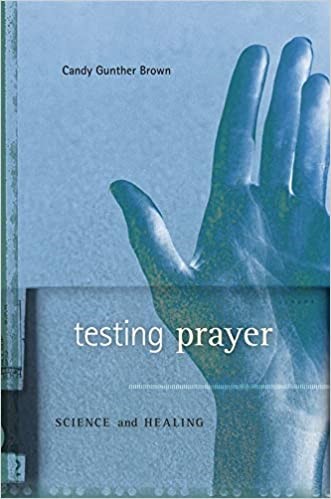
Lee Strobel also interviewed Candy Gunther Brown, PhD, regarding her book, Testing Prayer: Science and Healing, (Cambridge, MA: Harvard University Press, 2012). Brown is a scrupulous scholar who earned her undergraduate degree summa cum laude, master’s degree, and doctorate at Harvard University. She is a professor of religious studies at Indiana University. Her peer-reviewed articles have appeared in Academic Medicine and numerous other scholarly journals. Strobel interviewed her because of her focus on studying the impact of intercessory prayer on healing. Strobel, The Case for Miracles, 123-124. Brown strives to maintain academic neutrality and a nonsectarian approach to religious studies. She explains, “I do not assume the existence or nonexistence of a deity or other suprahuman forces, … What I argue is that people’s religious beliefs often have real-world effects that can be studied empirically.” Brown, Testing Prayer, 7. Strobel asked Brown to provide her opinions regarding the 2006 STEP study project that Shermer cited to show that prayer had no impact or even a slightly harmful impact on recovering cardiac patients. Brown started her response by stating there have been “gold standard” studies before and after STEP that reached the opposite conclusion of STEP: that the group receiving prayer had better outcomes. In 1988, Dr. Randolph Byrd published a peer-reviewed controlled study of 400 subjects in Southern Medical Journal in which Christians prayed by name for specific patients to rapidly recover and prevention of complications of death relating to various health conditions. The results of the study were: “Patients in the prayer group had less congestive heart failure, fewer cardiac arrests, fewer episodes of pneumonia, were less often intubated and ventilated, and needed less diuretic and antibiotic therapy.” Strobel, The Case for Miracles, 126-127. Then a decade or so later, a replication “gold standard” controlled study of the effects of intercessory prayer by Christians on almost 1,000 consecutively admitted patients conducted by Dr. William S. Harris and colleagues published in the Archives of Internal Medicine again showed that the group that received prayer had better health outcomes than the control group that did not receive prayer. Strobel, The Case for Miracles, 127.
The main problem with the STEP study is that the only individuals recruited to pray in the study were from Silent Unity of Lee’s Summit, Missouri. This group claims to be Christian, but almost all Christian scholars would not consider this group as being within mainstream Christianity and, instead, this group is outside traditional Christian orthodoxy. Particularly important in relation to prayer, the founders and leaders of this group have long denied prayer works miracles and have even called petitionary prayers useless. Instead, this group practices “affirmative prayer” which is a method which “involves connecting with the spirit of God within and asserting positive beliefs about the desired outcome.” Strobel, The Case for Miracles, 128-130. Brown opined that you cannot draw any conclusions on the effectiveness of traditional Christian prayer from the STEP study because it involved different inclusion criteria for those praying who were not Christians. Therefore, the STEP study is not the definitive word on prayer research. Strobel, The Case for Miracles, 130-131.
Brown further distinguished between prayer studies that involve distant versus personal prayer. First, most studies do not recognize and take into consideration that authentic healings seemed to be clustered in certain geographic areas. Second, certain people are reputed to have a special “anointing” or success rate with healing prayer. Third, the role of faith of those offering and receiving prayer is important. Most studies focus on “distant intercessory prayer”-intercessors pray for someone they don’t know. But Christians that emphasize healing prayer generally practice “proximal intercessory prayer”-prayers generally get up close to the person they are praying for, make physical contact with the person, and empathize with the person’s sufferings. Strobel, The Case for Miracles, 131-133. Brown and her research team conducted studies that take these factors into consideration. Their first study was done in Mozambique, Africa, where reports of miracles with high success rates abound for more than 20 years by charismatic Christian missionaries, Heidi and Rolland Baker. Brown focused on “proximal intercessory healing” of blindness and deafness (or severe vision or hearing problems), which are not particularly susceptible to psychosomatic healings. There were 24 subjects. She reported the results to Strobel, “After prayer, we found highly significant improvements in hearing and statistically significant improvements in vision. We saw improvement in almost every single subject we tested. Some of the results were dramatic.” The study was published in a peer-reviewed Southern Medical Journal, which evaluated and found the study to be scientifically sound and valid even though the sample was only 24 subjects. This was because with a smaller sample, the effects have to be larger and more consistent to achieve statistical significance, and the effects of the study were larger and more consistent. To further validate the study, Brown and her team, thereafter, did a replication study in Brazil. The results were similar. “Again, sight and hearing were improved after hands-on prayer was offered in Jesus’ name.” Her studies show that something is going on with proximal intercessory prayer. “This is more than just wishful thinking. It’s not fakery; it’s not fraud. It’s not some televangelist trying to get widows to send in their money. It’s not a highly charged atmosphere that plays on people’s emotions. Something is going on, and it surely warrants further investigation.” Strobel, The Case for Miracles, 133-137. As Strobel concluded after interviewing Brown, “Brown’s work and analysis have already undermined Shermer’s claim that when research is conducted scientifically, it shows ‘zero’ evidence for the miraculous. Quite the opposite appears to be true. It seems that upon further study, the evidence is good for the Christian side.“ Strobel, The Case for Miracles, 137.