

It is helpful to understand an overview of the Bible when reading and studying the Bible. The overall theme, message, and storyline of the Bible can be reduced to one word, “redemption.”
Redemption.
An excellent book on the redemption storyline of the Bible was written by Pastor James L. Nicodem, Epic: The Storyline of the Bible (Chicago, IL: Moody Publishers, 2013). The biblical definition of redemption is deliverance or rescue from our physical and spiritual broken condition that separates us from God, who is the source of eternal spiritual and physical life. There are 6 stages of redemption in the Bible.
REDEMPTION PROMPTED (Genesis). After God creates the world and everything in it, God places Adam and Eve in the Garden of Eden, and commands them not to eat the fruit of the tree of knowledge of good and evil or they would surely physically and spiritually die (Genesis 2:17). We may object, “If God did not want Adam and Eve to eat from that tree, why did God put the tree in the Garden of Eden? Was God playing a game with them to try to get them to disobey God’s command?” These objections reveal a rebellious streak in our hearts that questions whether God is God. God has a right to establish his creation and commands as God pleases. If some aspects of God’s creation and commands do not make sense to us, the problem is not with God; it is with us. We may also object that the penalty of eternal physical and spiritual death is too severe for disobeying God. But the explanation is simple. The first two chapters of Genesis explain that God is the source of life. The natural consequence of unplugging from God by rejecting God’s commands is death. When we disobey God, we tell God we want to be our own god.

Adam and Eve disobey God and eat the forbidden fruit of the tree
of knowledge of good and evil. Free Bible Images.
Satan the serpent (see Revelation 12:9) deceives Adam and Eve by telling them they will know good and evil like God if they eat the forbidden fruit. Then they eat the forbidden fruit, spiritually die, and cause sin to taint God’s very good creation. Consequently, Adam and Eve and their offspring are spiritually separated from God, humans will have conflict with each other because of their freedom to choose to do good and evil, and their bodies and creation will physically decay and die. But God promises to redeem or rescue humanity. God tells the serpent that Eve’s offspring will defeat or crush the serpent’s head after the serpent injures or strikes the heal of her offspring. We learn later in the Bible that Eve’s descendant offspring is Jesus.
God came to earth as Jesus Christ to rescue us from our sinful condition by taking upon himself the punishment of death that our sins deserve (Isaiah 53:5-6; Romans 4:25; 1 Peter 2:24). Jesus promises to all who repent of their sin and surrender their lives to him the freedom from sin’s control and power to live in a way that pleases God and is fulfilling. Nicodem, Epic: The Storyline of the Bible, chapter 1.
REDEMPTION PREPARED (Genesis-Song of Songs). 2,000 years before God came to earth as Jesus, God’s preparation of redemption begins when God chooses a man named Abram (God later changes his name to Abraham) to give birth to a people who would eventually give birth to Jesus. God calls Abram to leave his country, people, and household to go to the Promised Land to be the father of many nations. God promises worldwide blessing will come through his descendants (Genesis 12:1-3, 15:5). Specifically, God promises Abram a people, a place, and a purpose.
Abram has faith and obeys God and makes the 800 mile journey to the land of Canaan. So God fulfills his first promise of a people. God changes Abram’s name to Abraham (meaning father of many nations) and 25 years later after Abraham’s one hundredth birthday, God delivers his promise. His son Isaac is born. The book of Genesis provides historical accounts of the lives of Abraham’s descendants, Isaac, Jacob, and Joseph, who are often referred to as the “patriarchs,” the early church fathers. Thereafter, more and more descendants of Abraham are born until almost 2,000 years later when the Redeemer Jesus Christ is born in Bethlehem. But God’s people had to be qualitatively different from other people. So God gives them moral, ceremonial, and civil laws to live by. These laws are found in the first five books of the Old Testament collectively called the Pentateuch, a Greek word that means “five vessels or scrolls.”
God also fulfills his promise to Abraham of a place from which the rescue of humanity would occur. Several generations after Abraham arrived in in Canaan, a famine in the land forces Abraham’s descendants to relocate to Egypt, where Abraham’s great-grandson Joseph became second in charge after the Pharaoh. God uses Joseph to keep his people alive. Jacob’s descendants remain in Egypt for about 400 years, but a new pharaoh rules and makes God’s people slaves. God then uses Moses to lead the enslaved Israelites out of Egypt and to Mount Sinai, where they receive the 10 Commandments and other laws to obey to live as God’s people. God causes the Israelites to wander in the desert south of Canaan for 40 years because they disobey God and do not believe that God will help them defeat the Canaanites. Then God uses Joshua to lead the Israelites to conquer the Canaanites and gives the Promised Land of Canaan to them and they settle in Canaan. Thereafter, God conquers the Canaanites to punish them for their wickedness and evil practices, such as infant sacrifice. Joshua warns the Israelites that God will punish them if they become as wicked as the Canaanites (Joshua 24:11, 12).
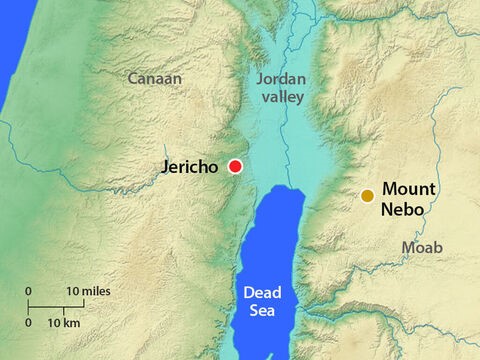
On Mount Nebo in Moab, God showed Moses the Promised Land in
the Jordan Valley and Jericho. Free Bible Images.
God’s third promise to Abraham is that the people’s purpose is to bless all peoples on earth by providing Jesus Christ as their Rescuer and Redeemer of all the peoples on earth who put their trust in him as stated above. God’s second purpose of the people of Israel was for them to demonstrate that having a relationship with God was so appealing that other peoples of the earth would also want to have a relationship with God.
Unfortunately, a few years after God gave the Israelites Canaan the Promised Land, they start to act wickedly. So God allows an enemy nation to defeat Israel and enslave God’s people again. They cry out to God for help. Then God sent them a judge to deliver them. Thereafter they return to their wicked ways. The cycle of wicked behavior, cry out to God for help, God sends a judge to deliver, etc. repeats for a few hundred years with a series of judges. Then God grants the Israelites’ request for a king and they reclaim the Promised Land during the reign of Israel’s first three kings (Saul, David, and Solomon) and build a beautiful temple for God. God also provides his people Books of Wisdom (Job through Song of Songs) through Solomon and others to help make God’s people wise in everyday affairs of life. The book of Job is about wisdom while suffering. Psalms teaches the wisdom that comes from knowing and worshiping God. Proverbs contains general wisdom sayings about practical daily living topics to make life work. Ecclesiastes talks about life, and the lack of meaning and wisdom without God. Finally, Song of Songs covers wisdom in romance and marriage.
But after the reign of the first three kings in about 900 BC, Israel splits into the 10 northern tribes called Israel and the two southern tribes called Judah because Solomon’s son, Rehoboam, treated the people harshly. Then God’s people stray from God and engage in idolatry. In 722 BC, Assyria conquers Israel. In 586 BC, Babylon conquers Judah. Nicodem, Epic: The Storyline of the Bible, chapter 2.
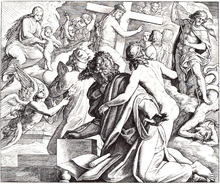
Vision of Isaiah depicted in this 1860 woodcut by Julius Schnorr von
Karolsfeld. Image from Wikipedia.og.
REDEMPTION PROPHESIED (Isaiah-Malachi). The Bible’s books of prophecy begin with Isaiah and end with Malachi. The four major prophets (Isaiah, Jeremiah, Ezekiel, and Daniel) are the longest prophecy books in the Bible, not the most important. The remaining 12 prophets are the minor prophet or shorter books of prophecy (Hosea through Malachi). There were other prophets like Elijah, Elisha, and many others, but the 16 prophets were the only ones who wrote Old Testament books. The prophets wrote in poetry and oracles or speeches. On occasion, they acted and illustrated their message in drama. The prophets preached repentance, predicted world events, and proclaimed the coming of Jesus Christ. Most of the prophecies related to preaching repentance and predicting world events. Although the smallest number of prophecies related to the coming of Jesus Christ, the cumulative predictive effect of the prophecies is quite specific about Christ’s coming, crucifixion, resurrection, and second coming to judge humanity and rule the kingdom of God in the new heaven and new earth.
For example, Isaiah’s prophecies (including but not limited to Jesus as a victorious king in Isaiah 9:6 and suffering servant in Isaiah 53:5-6) are so specific that Isaiah is called the “Gospel of the Old Testament.” See also the prophecies of Zechariah that Christ would ride triumphantly into Jerusalem on the back of a colt (Zechariah 9:9), but later would be betrayed for 30 pieces of silver (Zachariah 11:12-13), and have his body pierced at death (Zechariah 12:10), the exact time of Christ’s coming (Daniel 9:24), and that the coming Redeemer would be born in a small village of Bethlehem (Micah 5:2). The last Old Testament prophet, Malachi, wrote his book around 430 BC. For the next 400 years, God is silent and does not speak through any prophets. Nicodem, Epic: The Storyline of the Bible, chapter 3.
REDEMPTION PURCHASED (Matthew-John). God breaks his 400 years of silence by coming to the world as Jesus Christ, the long-awaited Messiah, and is born in Bethlehem. Jesus lives the first 30 years of his life in relative obscurity. Then he chooses and trains 12 disciples. He teaches, performs miracles, heals people, and shows people God’s love. Jesus sacrificially dies on the cross and then rises from the dead three days later to provide a way to God the Father, by grace and through faith in Jesus. In essence, this is when Jesus purchases humanity’s redemption. Thereafter, Jesus then ascends to heaven. There are four gospel (meaning “good news”) accounts of Jesus’ life and ministry because each gospel was written for different audiences that had their own needs, culture, and level of biblical understanding. Matthew is written predominantly to Jewish Christians, Mark (most likely the first gospel written) to persecuted and suffering Christian Gentiles perhaps in Rome, Luke to Jews and Gentiles, and John to all spiritual seekers. The gospels contain the same basic facts and supplement each other with additional information to give a more complete account of Jesus’ life and ministry. Nicodem, Epic: The Storyline of the Bible, chapter 4.
REDEMPTION PROCLAIMED (Acts-Jude). The same Luke who wrote the Gospel of Luke wrote the book of Acts, which provides an account of the birth and growth of the early Christian church. Right after Jesus returned to heaven, Peter and Paul and Jesus’ disciples proclaim and spread the good news (the gospel) about Jesus. The 21 books that follow Acts (Romans-Jude) are all epistles, which are letters written by first century Christian leaders to various groups of Christ followers as described in Acts. The epistles explain the basic doctrines of the Christian faith and how Christians are to apply those doctrines to their daily lives. Saul (a/k/a Paul), an early converted Jewish persecutor of Christians, wrote the first 13 epistles (Romans-Philemon). The next epistle, Hebrews, is written by an unknown author or perhaps Paul. The next epistle is James, the son of Mary and stepbrother of Jesus, who did not believe in Jesus until after the resurrection. James became the first leader of the church in Jerusalem. After James, follow the two epistles written by Peter and three epistles written by John. The last epistle was written by Jude, which was written either by one of Jesus’ 12 apostles named Jude, or was more likely written by another stepbrother of Jesus, Jude. Nicodem, Epic: The Storyline of the Bible, chapter 5.
REDEMPTION PERFECTED (Revelation). God reveals to the apostle John in the book of Revelation that Jesus is coming again to bring history to a close and complete the redemption and restoration of all things in the new heaven and new earth. In essence, God reveals what his fully redeemed, restored, and perfected creation will look like. The book of Revelation is apocalyptic literature that is hard to understand because it describes future events in highly symbolic language. Bible scholars do not all agree about the time frame and exact sequence of events of the end times described in Revelation. Some scholars think Revelation is a book about the future, but other scholars believe it is actually a book about the past. However, all scholars agree that Revelation is an encouraging reminder that Jesus defeats Satan in the end and all of his faithful followers are rewarded and will have a loving eternal relationship with Jesus in the new heaven and new earth. Nicodem, Epic: The Storyline of the Bible, chapter 6.
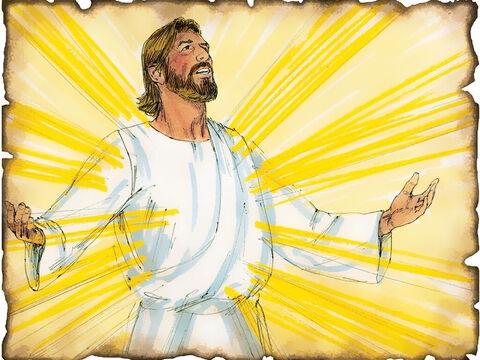
Jesus returns and perfects the redemption of
humanity and the world. Free Bible Images.
Story of the Bible in 22 books.
The basic essential chronological story of the Bible is found in the 22 history books of the Bible, while the remaining 44 books of poetry, wisdom, prophecy, and epistles/letters of the Bible supplement the story, give us important details, and demonstrate human reactions to God’s actions throughout the story of the Bible. The 17 Old Testament History Books include: Genesis, Exodus, Leviticus, Numbers, Deuteronomy, Joshua, Judges, Ruth, 1 Samuel, 2 Samuel, 1 Kings, 2 Kings, 1 Chronicles, 2 Chronicles, Ezra, Nehemiah, and Esther. The 5 New Testament History books include: Matthew, Mark, Luke, John, and Acts. The New Testament prophecy book of Revelation is not history, but it provides a vision of the end times and Jesus’ ultimate victory over evil See Christopher D. Hudson, Self-Guided Tour of the Bible, (Carson, CA: Rose Publishing, 2016), 59-68.
The Basic Essential Chronological Story of the Bible.
GOD CREATES (Date unknown) (Genesis 1-2). God creates the world and everything in it, God places Adam and Eve in the Garden of Eden, and forbids them from eating the fruit of the tree of knowledge of good and evil or they would surely physically and spiritually die.
HUMANITY SINS (Date unknown) (Genesis 3). Satan the serpent (see Revelation 12:9) deceives Adam and Eve by telling them they will know good and evil like God if they eat the forbidden fruit. Then they eat the forbidden fruit, spiritually die, and cause sin to taint God’s very good creation. Thereafter, God tells the serpent that Eve’s offspring will defeat or crush the serpent’s head after the serpent injures or strikes the heal of her offspring.
THE WORLD FLOODS (Date unknown) (Genesis 6-9). Humanity deteriorates into evil. Noah obeys God, builds an ark, and only Noah and his family survive the catastrophic judgment of a colossal flood.
NATIONS DEVELOP (Dates unknown) (Genesis 10-11). God disperses the growing human race by causing them to speak different languages after they build the tower of Babel with its top in the heavens to make a name for themselves.
GOD CALLS ABRAHAM (2100 BC) (Genesis 12-36). God calls Abraham to be the father of many nations and promises worldwide blessing will come through his descendants.
GOD SUSTAINS HIS PEOPLE (1876 BC) (Genesis 37-50). During a long famine, Abraham’s grandson, Jacob (a/k/a Israel) and his family go to Egypt where Jacob’s son Joseph is second in charge after the Pharaoh. God uses Joseph to keep his people alive. Jacob’s descendants remain in Egypt for about 400 years.
GOD DELIVERS (1446 BC) (Exodus-Leviticus). God uses Moses to lead the enslaved Israelites out of Egypt and to Mount Sinai where they receive the 10 Commandments and other laws to obey to live as God’s people.
ISRAEL WANDERS (1446-1406 BC) (Numbers-Deuteronomy). God causes the Israelites to wander in the desert south of Canaan for 40 years because they did not trust in God and they disobeyed God.
GOD GIVES THE PROMISED LAND TO ISRAEL (1406-1350 BC) (Joshua). God uses Joshua to lead the Israelites to conquer the Canaanites and gives the Promised Land of Canaan to them and they settle in Canaan.
JUDGES DELIVER (1350-1051 BC) (Judges-Ruth). God raises a series of judges who lead, guide, and deliver Israel in military victories over foreigners that God allowed to oppress Israel because Israel forsook God.
KINGS RULE A UNIITED ISRAEL (1051-931 BC) (1 and 2 Samuel-1 Kings 11; 1 Chronicles-2 Chronicles 9). God grants the Israelites’ request for a king and anoints King Saul. The second king is David, and the third king is David’s son Solomon.
THE KINGDOM OF ISRAEL BREAKS UP (931-722 BC) (1 Kings 12-2 Kings 17; 2 Chronicles 10-35). Disagreements between the Israelites splits the kingdom: Israel in the north and Judah in the south. God’s people stray from God and engage in idolatry while the prophets warn them of judgment.
ASSYRIA DEFEATS ISRAEL (722 BC) (2 Kings 17). When the people of the northern kingdom of Israel do not listen to the prophets’ warnings, God allows the Assyrian Empire to conquer the northern kingdom. People flee, die or are forced to relocate.
GOD EXHILES JUDAH (586 BC) (2 Kings 18-25; 2 Chronicles 36). God sends more prophets to warn his people. When the people ignore the words of the prophets, God allows the Babylonian Empire to conquer the southern kingdom of Judah and forces most of the people to relocate.
JEWS RETURN TO JERUSALEM (538-430 BC) (Ezra-Esther). Zerubbabel, then Ezra, and thereafter Nehemiah help relocate many of the Jews from Babylon. They rebuild the temple and walls of Jerusalem.
ISRAEL WAITS FOR THE MESSIAH (430-4 BC). During the time between the Old and New Testaments, Israel does not prosper under mostly foreign rule. God is silent and does not speak through any prophets.
GOD COMES TO EARTH AS JESUS THE MESSIAH (4 BC-AD 30) (Matthew-John). God takes on human form as Jesus, the long-awaited Messiah, and is born in Bethlehem. Jesus lives the first 30 years of his life in relative obscurity. Then he chooses and trains 12 disciples. He teaches, performs miracles, heals people, and shows people God’s love. Jesus sacrificially dies on the cross and then rises from the dead three days later to provide a way to God the Father, by grace and through faith in Jesus. He then ascends to heaven.
THE EARLY CHURCH SPEADS THE GOSPEL (AD 30-96) (Acts). Peter and Paul and Jesus’ disciples spread the good news (the gospel) about Jesus, including the claim that he is coming again to bring history to a close and complete the redemption and restoration of all things in the new heaven and new earth. The New Testament ends with the book of Revelation which reveals and explains the end times of history.
Other resources for an overview and themes of the Bible.
Another good book for an overview and themes of the Bible is Benjamin Galan, MTS, ThM, et al, Bible Overview (Peabody, MA: Rose Publishing, 2019). For excellent videos on each book of the Bible, see Tim Mackie and Jon Collins, Bible Project and Read Scripture videos at https:/www.bibleproject.com.