

Jesus was fully God.
Everyone is familiar with the Christmas nativity scene with baby Jesus being born in a manger. But the real reason for the season is that God took on the flesh of humanity and came to earth. A summary of the person of Christ is as follows: “Jesus Christ was fully God and fully man in one person, and will be so forever.” Wayne Grudem, Systematic Theology: An Introduction to Biblical Doctrine (Grand Rapids, MI: 1994, Appendix 6 and glossary copyright 2000), 529; Wayne Grudem and edited by Jeff Purswell, Bible Doctrine: Essential Teachings of the Christian Faith (Grand Rapids, MI: Zondervan, 1999), 229.
Jesus’s birth by the Holy Spirit without a human father was a miracle. Jesus was miraculously conceived in the womb of his mother, Mary, by the Holy Spirit, without a human father (Matthew 1:18-25; Luke 1:34-35).
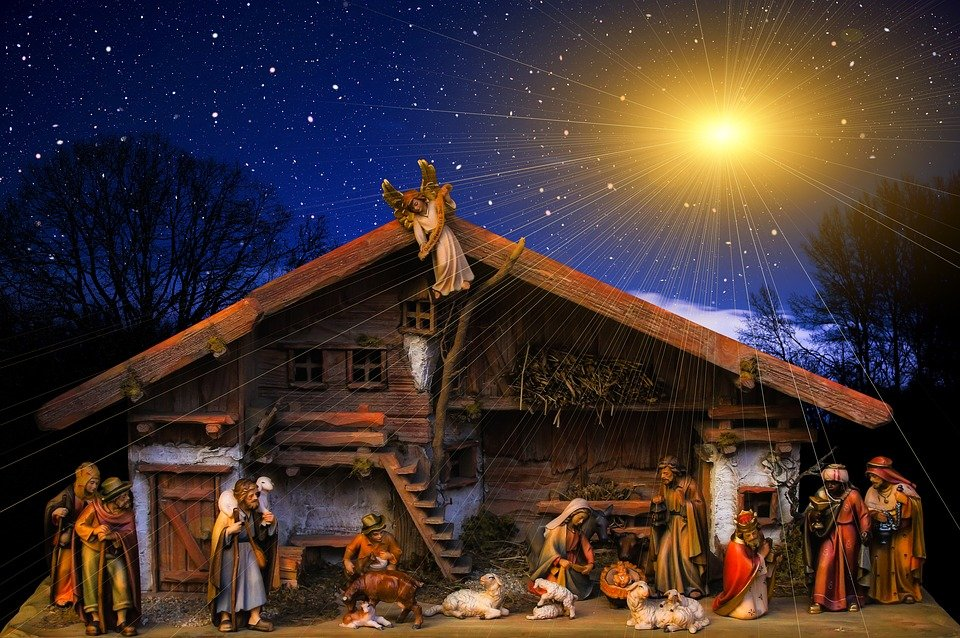
This virgin birth shows that salvation must come from the Lord and not from human effort. (Galatians 4:4-5). The virgin birth made it possible for God to fully unite with humanity in one person (John 3:16; Galatians 4:4). The virgin birth also means that Jesus did not inherit a sinful nature from a human father while the Holy Spirit also prevented him from inheriting sin from Mary (Luke 1:35). Grudem, Systematic Theology, 529-532; Grudem and Purswell, Bible Doctrine, 230.
Jesus was referred to as God and the Word of God that created the heavens and the earth. The word theos, “God,” in the Bible is also used to refer to Jesus (Isaiah 9:6; John 1:1-4, 18; 20:28; Romans 9:5; Titus 2:13; Hebrews 1:8 quoting Psalm 45:6; 2 Peter 1:1). In the New Testament, many times the word “Lord” meaning God is used to refer to Jesus (Luke 1:43, 2:11, 18; Matthew 3:3 quoting Isaiah 40:3; Matthew 22:44 quoting Psalm 110:1; 1 Corinthians 8:6, 12:3; Hebrews 1:10-12 quoting Psalm 102; Revelation 19:16). Jesus referred to himself as “I AM who I AM” (John 8:59 quoting Exodus 3:14), which is how God designates himself as the eternal existing God, who is the source of his own existence and who always has been and always will be. Jesus also referred to himself as the “Alpha and Omega” claiming he was an equal deity with God the Father and in control over all history and creation as the beginning and the end (Revelation 1:8, 22:13). The apostle John referred to Jesus as the “the Word” referring to both the powerful, creative Word of God that created the heavens and the earth (Psalm 33:6) and the sustaining force that holds the universe together (John 1:1) and became human flesh full of grace and truth as the Son of God (John 1:14).
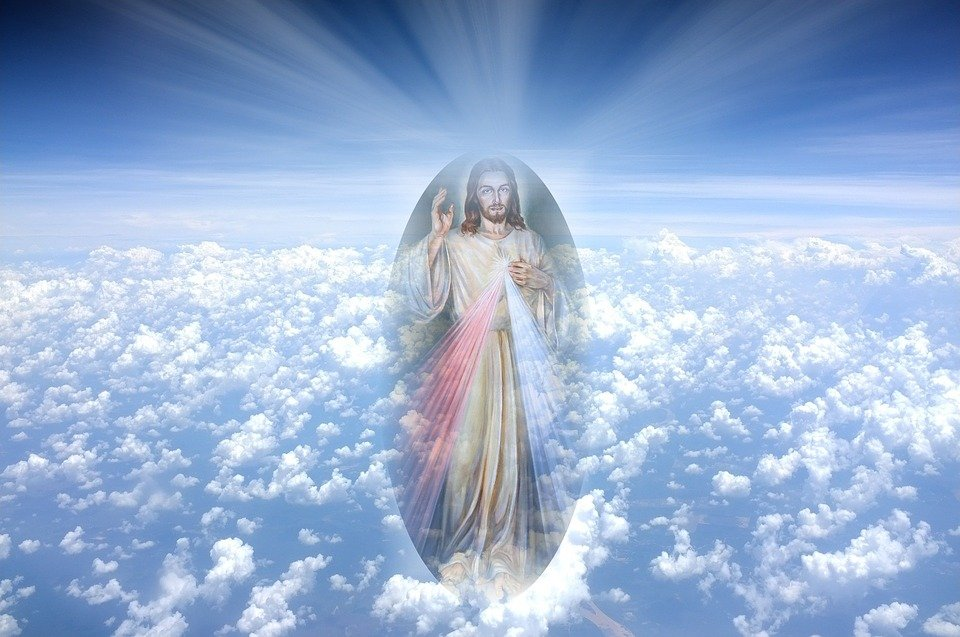
Jesus often referred to himself as the divine “Son of Man” and “Son of God” that came from heaven and would eternally rule the world. Jesus referred to himself as the “the Son of Man” 84 times (e.g., Matthew 16:13, 26:64-66; Luke 9:18) referring to the background vision in Daniel 7 where Daniel saw a “son of man” who “came to the Ancient of Days” which speaks of someone who had a heavenly origin and who was given eternal rule over the whole world (Daniel 7:13-14). Grudem, Systematic Theology, 543-549; Grudem and Purswell, Bible Doctrine, 236-239. Jesus also claimed to be the divine “Son of God” that was equal to God (John 5:17-18, 10:3033, 19:7). The Trinity. What is the Trinity and What Do Christians Believe (Peabody, MA: Rose Publishing: 1999), 4.
.
Jesus performed miracles and read people’s thoughts to prove he could forgive sins and was worthy of being worshiped. Jesus performed many nature and healing miracles. (See the Miracles page of this website), demonstrated he knew people’s thoughts (Mark 2:8), even the thoughts of those who would betray him (John 6:64), and the belief or unbelief on the hearts of all people. (John 2:25, 16:30).
Jesus claimed his ability to perform miracles and read people’s thoughts proved he had authority to forgive sins (Mark 2:5-12; Luke 5:21). Jesus also was worthy of being worshiped and accepted worship. (Matthew 14:33, 28:17-18; John 5:22-23, 9:38; 17:5; Philippians 2:9-11; Hebrews 1:6). Grudem, Systematic Theology, 543-549; Grudem and Purswell, Bible Doctrine, 236-239.; Rose Publishing, The Trinity, 5..
Jesus had to be fully God to be able to reveal God, bear the full penalty for all of the sins of those who believe in him, and to bring back sinners to God.
Jesus had to be God to make salvation of man possible. Only as the infinite God could Jesus bear the full penalty for all the sins of those who believe in him (Jonah 2:9). Jesus also had to be God to be the one mediator between God and man (1 Timothy 2:5). As the mediator, Jesus was able to reveal God most fully to man and restore the relationship between sinful man and God (John 14:9). Although it may be difficult to understand, Jesus’ divine and human natures remain distinct and retain their own attributes, but they are united together in one person. Grudem, Systematic Theology, 553-558; Grudem and Purswell, Bible Doctrine, 241-244.
Attributes of God.
See the list of approximately 250 Attributes of God on this website for a fuller list of the Attributes of God.
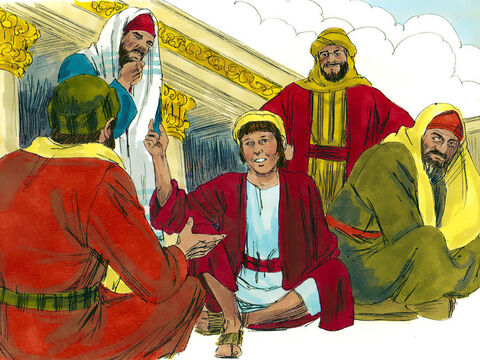
12-year-old Jesus in in the temple in Jerusalem with the teachers amazing them with his understanding and answers. See Luke 2:41-52. Free Bible Images.
Jesus was fully man.
Jesus was also fully or truly human. He had a human body, was born as a baby (Luke 2:7), physically grew up as an adult, increased in wisdom and favor with God and man (Luke 2:40, 52), learned obedience through suffering (Hebrews 5:8-9), became tired (John 4:6) and weak (Matthew 4:11) and thirsty (John 19:28) and hungry (Matthew 4:2), died on the cross (Luke 23:46), appeared with a perfected physical body with human flesh and bones and ate with his disciples after he rose from the dead, and ascended to heaven where his human body continues to exist (Luke 24:39-42, 50-51; John 20:17-21:13; Acts 1:9). Jesus also had a human mind (Mark 13:32), soul (Matthew 26:38), and emotions (Matthew 8:10, John 11:35, 12:27, 13:21). Finally, for the first 30 years of Jesus’ life, his family, friends, and neighbors saw him as no more than an ordinary good man, and not as God himself in the flesh. (Matthew 13:53-38) Grudem, Systematic Theology, 532-535; Grudem and Purswell, Bible Doctrine, 230-232.
Jesus was different in that he was sinless.
Though Jesus was fully human, he was different than other humans in that he never committed sin during his lifetime (John 8:12, 29, 15:10, 15:10, 18:38; 2 Corinthians 5:21; Hebrews 4:15). Even Satan was unable to persuade Jesus to sin after tempting him for 40 days in the wilderness (Mark 1:12-13; Matthew 4:1-11; Luke 4:1-13). Although God can’t be tempted with evil (James 1:13) and the union of Jesus’ human and divine natures in one person prevented Jesus from sinning, Jesus refused to rely on his divine nature to make it easier for him to face temptations and not sin. Grudem, Systematic Theology, 535-539; Grudem and Purswell, Bible Doctrine, 232-233.
.
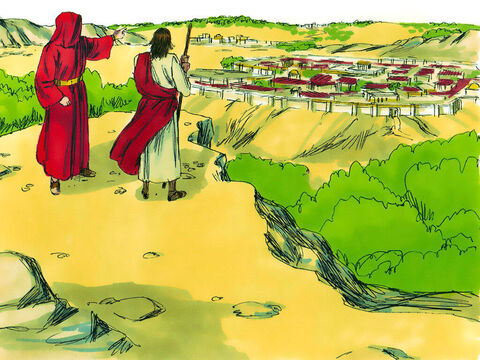
Satan tempted Jesus by offering the kingdoms of the world to Jesus if Jesus will worship Satan, but Jesus would only worship and serve the Lord God. See Luke 4:5-8. Free Bible Images.
Jesus had to be fully or truly human to be the Messiah and earn our salvation.
Jesus’ humanity is a fundamental belief of Christianity. The apostle John said that to deny Jesus’ true humanity was the doctrine of the antichrist (1 John 4:2-3). The atonement is “the work Christ did in his life and death to earn our salvation.” Grudem, Systematic Theology, 568; Grudem and Purswell, Bible Doctrine, 248. The love of God was the cause of the atonement (John 3:16) and the justice of God required that God find a way to pay for the penalties of our sins, because God could not accept us into fellowship with himself unless the penalty was paid (Romans 3:25-26). Once God, in his love, decided to spiritually save some humans, the atonement was absolutely necessary (Matthew 26:38-39; Luke 24:25-27). Grudem, Systematic Theology, 568-570; Grudem and Purswell, Bible Doctrine, 248-249. There are several reasons why Jesus had to be fully man to be the Messiah and earn our salvation. Jesus had to be a man to be our representative and obey God in our place, whereas Adam and Eve disobeyed God as our original representatives. (Genesis 2:15-3-7; Luke 4:1-13; Romans 5:18-19; 1 Corinthians 15:45-47)). Jesus had to be a man to die in our place and as an acceptable substitute sacrifice to God to pay the penalty of sin that was due to us (Hebrews 2:14-17). Jesus also had to be a man to fulfill God’s original purpose for man to rule over God’s creation (Matthew 28:18; Luke 19:17-19; 1 Corinthians 6:3; Ephesians 1:22; Hebrews 2:7-9; Revelation 3:21). Grudem, Systematic Theology, 540-543; Grudem and Purswell, Bible Doctrine, 235-236. It is important to recognize that Jesus voluntarily took on himself the penalty for our sins (Matthew 26:38-39; Luke 24:25-27). This was not unfair because God is the ultimate standard of what is just and fair and he decided that the atonement would take place this way and that it satisfied the demands of his own righteousness and justice. Grudem, Systematic Theology, 574; Grudem and Purswell, Bible Doctrine, 253. Jesus’ decision to sacrifice his life for us is the ultimate demonstration of his teaching that there is no greater love than sacrificial love (John 15:13).