

CHRISTIAN DENOMINATIONS
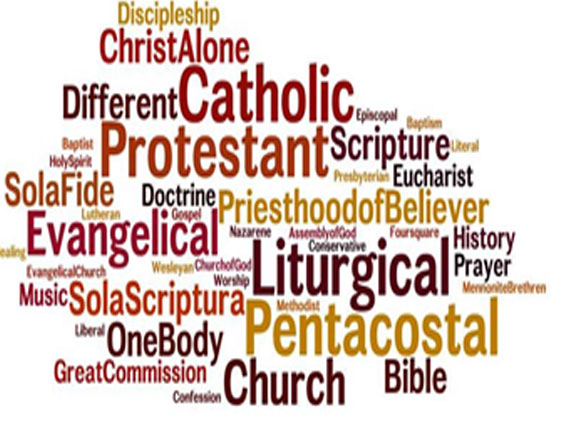
Why are there so many Christian denominations? A denomination is a branch or sub-group of Christians that has a distinct name, organization structure, and set of core doctrines. Although denominations may have different interpretations on non-essential Christian doctrines, the operation of the churches within the denominations, and the style and manner of worship services, they generally agree on essential Christian doctrine. The best approach for you to select a denomination and a church is to read the doctrinal statement of the particular church you are considering and determine whether the church’s doctrine is biblical and whether the church is a healthy and well-balanced church in terms of its stance on non-essential Christian doctrines, the operation of the church, and whether you feel comfortable with the style and manner of the worship services. Although the Bible is not clear on why God would allow so many Christian denominations, the most likely main reason is that humans are fallible and may not agree on secondary Christian doctrine
issues. Another reason is that not everyone feels comfortable worshiping God in the same way. Some people may prefer more traditional formal liturgical worship and other people may prefer more contemporary less formal worship. But keep in mind, no denomination or particular
church is a perfect denomination or church. You should select a denomination and church that teaches essential Christian doctrine, helps you worship God and apply Christian doctrine to your life, and offers opportunities to serve and help others grow in their Christian faith.
There are three major branches of Christianity: Roman Catholic, Protestant, and Eastern Orthodox. These churches are considered liturgical churches that conduct their services by a strict, prescribed liturgy, which is a formal structure or order of worship according to church tradition with emphasis upon ceremony and ritual. Some liturgical churches use various forms of religious icons. The Vatican is the city state of Rome, Italy ruled by the pope that is the center of the Roman Catholic Church.
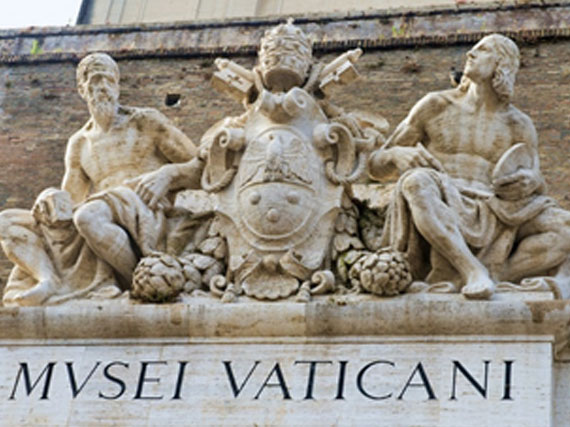
Roman Catholic. The Roman Catholic Church is a liturgical church. Catholics believe that Jesus appointed his disciple Peter as the first leader or pope of the Catholic Church. Peter died in about AD 66. From AD 540 to 604, Gregory the Great was the pope. During this time period, the pope’s office came to be viewed as ruling over the whole church as God’s highest mediator or key human authority or head of the church. Catholics consider church tradition as equal in authority to the Bible, and also look to the pope (the bishop of Rome) for infallible pronouncements on the meaning of the Bible and Christian dogma or doctrine. The Catholic Bible canon includes 46 books for the Old Testament including the deuterocanonical books (the Aprocypha) and 27 books of the New Testament. Catholics also believe that Jesus died on the cross as a substitutionary sacrifice for everyone’s sins, but that God by his grace infuses the gift of faith in Jesus in those who receive that grace through the sacraments offered in the Catholic Church of baptism (removes original sin-usually in infants), Communion/Eucharist (transubstantiation-the bread and wine substance, but not the properties, are changed into Jesus’ body and blood), Confirmation, Penance/Confession of sins, etc. and doing works of love. Some modern Catholics also believe that people can earn salvation through their good works, without faith or church participation. After death, the souls of the faithful go to heaven immediately or after they are purified in purgatory if they were imperfectly purified before death. God consigns and banishes the souls of those who reject God to eternal punishment separated from God in hell. Catholics believe that Mary, the mother of Jesus, was conceived by her mother immaculately (free of original sin), remained a virgin perpetually, and was assumed bodily into heaven. Mary is the Mother of the Church and is considered an object of veneration, which is a show of honor that stops short of worship. Catholics also venerate other saints.
In a nutshell: The pope rules over the whole church from the Vatican in Rome, priests as mediators between humans and God, and church tradition as equal in authority to the Bible.
Famous members: Saint Mother Teresa of Calcutta, John F. Kennedy, J.R.R. Tokien, G. K. Chesterton.
Eastern Orthodox
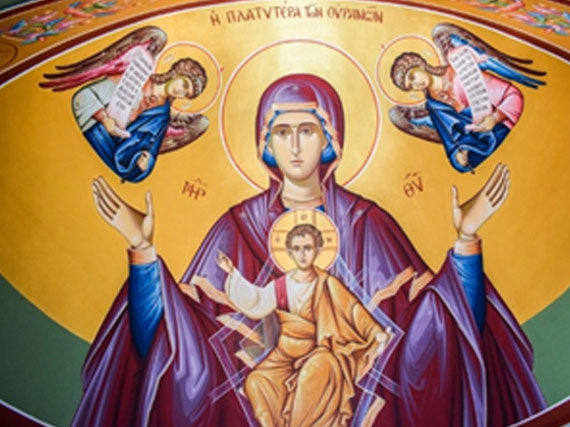
Eastern Orthodox church icons of Mary, Jesus, and angels that are sacred images used in worship.
Eastern Orthodox. The Eastern Orthodox Church (or just “Orthodox Church,” or “Orthodox Catholic Church”) is a liturgical church that split from the Western (Roman Catholic) Church during the Middle Ages (AD 1054) over issues of church leadership and theology. The Orthodox Church maintained that teams of bishops called synods should lead the church, rather than a single pope. The pope in Constantinople has the primacy of honor. The church is organized nationally (Armenian, Greek, Russian, etc.). The Bible is without error on matters of faith only. The Bible is to be interpreted by Sacred Tradition, especially the 7 Ecumenical Councils which met from AD 325 to 787. The Orthodox Bible canon includes 49 books for the Old Testament (the Catholic Bible plus three more) and the same 27 books of the New Testament. Theologically, the Orthodox Church places a high emphasis on mysticism, and considers salvation to involve achieving greater union with God (theosis). In Christ, God became human so that human beings might be deified, which means they have the energy of God’s life in them. Through baptism and
participation in the church, Orthodox Christians receive the benefits of Jesus Christ’s redeeming work as they persevere. Like Roman Catholics, they consider church tradition to be just as authoritative as the Bible, and also practice veneration of Mary (perpetual virginity-according to tradition not dogma, bodily assumption into heaven), and the saints through icons (images of Christ, Mary, or the saints through which God is to be worshiped). The sacraments offered in the Orthodox Church of baptism (initiates God’s life-usually in infants), Communion/Eucharist (transubstantiation-the bread and wine substance, but not the properties, are changed into Jesus’ body and blood-a Mystery to be left unexplained), Confirmation, Penance/Confession of sins, etc. After death, the souls of the faithful are purified as needed (a process of growth, not punishment), then they get a foretaste of eternal blessing in heaven. God consigns and banishes the souls of those who reject God to a foretaste of eternal punishment/torment separated from God in hell.
In a nutshell: Salvation to involve achieving greater union with God (theosis), Jesus and the Holy Spirit through baptism and participation in the church sacraments, and church tradition as equal in authority to the Bible.
Famous members: Aleksandr Solzhenitsyn, Vladimir Putin, Hank Hanegraaff, Tom Hanks.
Protestant: Protestant Christians protested and split from the Roman Catholic Church during the period now referred to as the “Protestant Reformation” starting in 1517. Protestants denounced the extrabiblical traditions and corrupt practices of the medieval Roman Catholic Church and sought a return to the Bible alone for doctrine. While viewing tradition as helpful, Protestants today emphasize the need to respect the Bible as the highest authority for Christian belief and practice. Protestants also emphasize that salvation is by God’s grace through faith, not through good works or rituals, even though those things are important to varying degrees depending on the Protestant denomination. Protestants believe that good works are evidence of genuine faith.
Protestant denominations.
Lutheran. As the name implies, Lutheran Churches are affiliated with the theology of Martin Luther, the German friar/professor who started the Protestant Reformation in 1517 when he wrote and posted his “95 Theses” (challenges and objections to Roman Catholic teaching) on the door of the Castle Church in Wittenberg, Germany. In 1530 after Luther, a successor German Reformer Philipp Melanchthon wrote and presented the Augsburg Confession at the Diet of Augsburg, Germany, which is the first formal Lutheran statement of faith and list of several abuses practiced by the Roman Catholic Church with biblical arguments to correct them. The Lutheran Bible canon includes the standard Protestant canon of 39 books for the Old Testament and 27 books of the New Testament. The Lutheran Church is a liturgical church that has a high sacramental theology. Infant or adult baptism is necessary for salvation and gives God’s grace. The Lord’s Supper/Communion remains truly bread and wine but also becomes truly Jesus’ body and blood (consubstantiation). The Lutheran
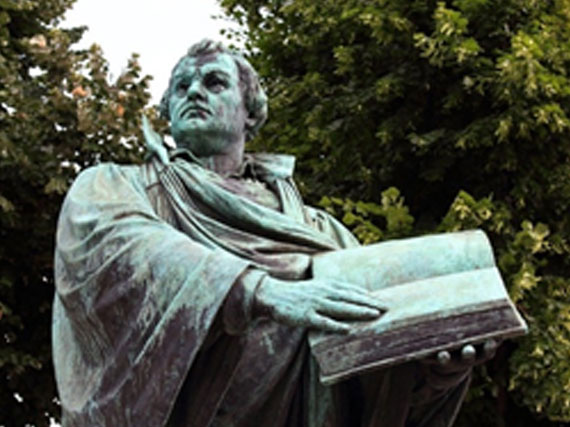
Martin Luther statue in Worms, Germany.
Church’s liturgy is similar to the Episcopal Church. Conservative Lutherans (Missouri Synod) generally affirm that God chooses who will be saved before they believe. Lutherans believe that all believers are “priests” meaning that they have direct access to God. In 1999, the Evangelical Lutheran Church in America (“ELCA”) approved full communion with the Episcopal Church. In 2009, the ELCA opened the ministry to gay and lesbian pasters in committed relationships. Lutherans believe that after death, the souls of believers go immediately to be with Jesus Christ, and at his return, their bodies are raised to immortal and eternal life. The souls of those who reject God begin suffering immediately in hell. Lutherans hold to specific understandings of justification and amillennial eschatology. Also, Lutherans teach that the Roman Catholic Pope is the Antichrist.
In a nutshell: Martin Luther started the Protestant Reformation protesting the unbiblical practices of the Roman Catholic Church. Lutherans do not recognize and follow the Roman Catholic Pope. The Missouri Synod Lutherans are theologically conservative. ELCA Lutherans are theologically liberal.
Famous members: Dietrich Bonhoeffer, Paul Tillich, Rudolph Bultmann, Dr. Seuss (purportedly).
Anglican and Episcopalian.
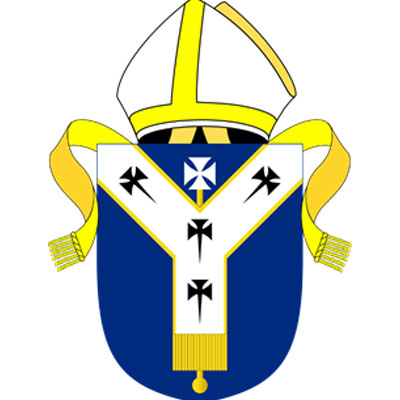
The coat of arms for the Diocese of Canterbury. Image from Wikipedia.org.
In 1534, King Henry VIII was declared the head of the Church of England after he broke with the Roman Catholic Church and was excommunicated. In 1549, Thomas Crammer produced the first Common Book of Prayer, which established the liturgy. In 1571, 39 Articles of Religion established the defined statements and practices of the Church of England. The Anglican Church became and is the national liturgical church of England. In America, the official presence of the English Church is in the form of the Episcopal Church (after the Greek word for “overseer”: episkopos). There is also a more conservative branch known as the Anglican Church in North America (the denomination Darek Demars is currently a member of) and the Reformed Episcopal Church. These conservative branches base their doctrine on the 39 Articles of Religion. The Anglican/Episcopal Bible canon includes the standard Protestant canon of 39 books for the Old Testament and 27 books of the New Testament. The Apocrypha is respected but not
included in the canon. The Bible must be interpreted in light of tradition and reason. We share in Jesus Christ’s victory when in baptism we become living members of the church, believing in him and keeping his commandments. The sacraments are “outward and visible signs of an inward and spiritual grace.” Infants and converts are made part of the church in baptism. Jesus’ body and blood are truly present in the Last Supper/Communion. The church’s main distinctive is its organizational structure, which is similar to Catholicism. Its unity is based on the “apostolic succession” of bishops going back to the apostles, of whom the bishop of Rome is one of many. One archbishop of Canterbury presides over a number of other bishops who in turn preside over local congregations. Anglican/Episcopal churches also tend to be very formal/liturgical in their worship services, place great value on historic traditions, and have a high view of the sacraments. They are also widely known for the Book of Common Prayer, which serves as a guide for Anglican worship services and daily prayer. Members are free to accept or reject the Roman Catholic doctrines of Mary. Priests may marry. In 1976, the Episcopal Church approved the ordination of women. In 2009, the Episcopal Church approved the ordination of gay bishops and allowed bishops to bless same-sex unions.
In a nutshell: The semi-Catholic version of Protestantism.
Famous members: C. S. Lewis, Theodore Roosevelt, J. I. Packer, John Stott, N. T. Wright, Bono.
Presbyterian.
Presbyterian. In 1536, John Calvin wrote Institutes of the Christian Religion. From 1643 to 1649, the Westminster Standards defined the Presbyterian doctrine. In 1789, the Presbyterian Church (USA) was first organized. The Presbyterian Church obtained its name from the Greek word for “elder” (presbuteros). Presbyterianism is noteworthy for its unique organizational structure, in which local congregations are governed by teams of elders who, in turn, are part of a denomination-wide assembly of elders. In America, the largest of these assemblies are the Presbyterian Church (USA) (which is more liberal in its doctrine) and the more doctrinally conservative Presbyterian Church in America. Christ alone is the head of the church. The Presbyterian Bible canon includes the standard Protestant canon of 39 books for the Old Testament and 27 books of the New Testament. The Bible is inspired, infallible, and the sole and final rule of faith. We are saved by grace alone and God imputes to us his gift of righteousness through faith alone (sola fide) in

Jesus Christ, who sacrificed his life so we can have an eternal relationship with God. Good works are the natural result of true faith, but are not the basis of our right standing before God. Baptism is not necessary for salvation for infants or adults, but is a public proclamation of faith and trust in Jesus as Savior and Lord. Jesus’ body and blood are spiritually present during Communion/the Lord’s Supper. The Presbyterian denomination is also distinctive for its emphasis on Reformed/Calvinist theology. Conservatives affirm the “five points of Calvinism”: 1. Total depravity -humans are so sinful that they cannot initiate a spiritual relationship with God. 2. Unconditional election-God predestines/elects some people to have a relationship with God and other people to spiritually perish in hell. 3. Limited atonement-Jesus’s sacrificial death and atonement for sins only applies to those who God chose or elected. 4. Irresistible grace- God infallibly draws to Jesus Christ those whom he chooses or elects. 5. Perseverance of the saints/Christians-true Christians that God has chosen or elected will never fall away and reject God.
In a nutshell: Governed by elders and affirm Calvinism (predestination) theology.
Famous members: B. B. Warfield, J. Vernon McGee, Jimmy Stewart, Ronald Reagan, Fred Rogers (of Mr. Rogers’ Neighborhood), R. C. Sproul, Tim Keller.
Methodist.
Methodist. In 1738, two devout Anglican ministers of the Church of England, John Wesley and his younger brother Charles Wesley, were instrumental in the Great Awakening revival movement, which they called “Methodists” because of the way they used “rule” and “method” to conduct religious affairs. In 1784, the USA Methodists formed a separate church body. Specifically, this denomination arose out of the ministry of John Wesley in the 1700s. Wesley was an Anglican priest who pioneered new ministries on the American frontier. His followers, known as Methodists, subsequently split off into a new denomination. The church is the body of Jesus Christ, represented by church institutions. Bishops oversee regions and appoint pastors. Clergy and laity meet together in a national “General Conference” every four years. All pastors are itinerant, which means the pastors move from one church to the next as directed by the bishop (on average once every four years). The Methodist Bible canon includes the standard Protestant canon of 39 books
for the Old Testament and 27 books of the New Testament. The Bible is inspired, infallible, and the sole and final rule of faith. But most Methodists do not believe the Bible is infallible. We are saved by grace alone when God regenerates and forgives us through faith in Jesus Christ, who sacrificed his own life for our sins. Good works are the natural result of true faith, but are not the basis of our right standing before God. Baptism is not necessary for salvation for infants or adults, but is a public proclamation of faith and trust in Jesus as Savior and Lord. Jesus’ body and blood are spiritually present during Communion/the Lord’s Supper. Methodist theology is traditionally Arminian, which means that humans have a free will that may accept or reject God’s gracious free gift of salvation. They disagree with all five points of Calvinism. Some Methodists believe that Christians can achieve perfect sanctification in this life (Wesleyan Holiness Movement). Many also teach that Christians can forfeit their salvation through willful/persistent sin. Many Methodist churches also place a heavy emphasis on social activism. Methodist worship services are often more formal/liturgical, but some are contemporary.
In a nutshell: The “rule” and “method” to conduct religious affairs. Arminian (human free-will) theology and activism.
Famous members: Francis Asbury, William Booth (founder of The Salvation Army), George W. Bush, I. Howard Marshall, Thomas Oden.
Anabaptists.
Anabaptists. In 1525, Protestants in Zurich, Switzerland began practicing believer’s baptism. In 1537, Menno Simons began leading the Mennonite movement. In 1682, a Quaker, William Penn, founded the Province of Pennsylvania. Anabaptist groups emerged out of the radical wing of the Protestant Reformation-those who distanced themselves from participating in society. Today, Anabaptist offspring churches include the Mennonite Church, Church of the Brethren, the Amish Church, Quakers (Friends) Church, and the Hutterite Church. They are well-known for their emphasis on pacifism, non-participation in military or political matters, and (in some cases) living in secluded, alternative communities. Doctrine is deemphasized, and liberal views with social emphasis prevail in some of the churches, including most Quaker (Friends) churches. The Anabaptist Bible canon includes the standard Protestant canon of 39 books for the Old Testament and 27 books of the New Testament. Most Anabaptists view the Bible as the inspired book for knowing and following Jesus, but not as infallible.
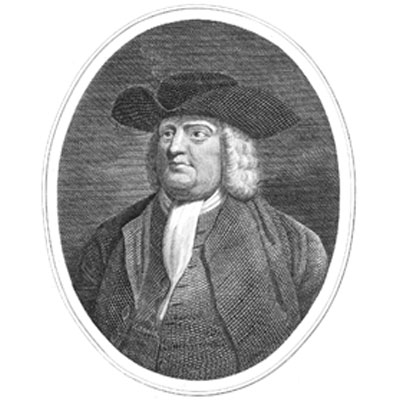
Anabaptist Quaker William Penn founded the Province of Pennsylvania. Image from Wikipedia.org.
Jesus is the living Word and the Bible is the written Word that points to Jesus. However, how Anabaptists live is emphasized over having correct doctrine. Salvation is a personal experience of becoming at peace with God through faith in Jesus as we follow Jesus’ example as his disciples by living with the power of the Holy Spirit, a life marked by holiness, love, service, a simple lifestyle, and peacemaking. The Anabaptist Church is a non-liturgical church. No one system of church is recognized and the church is primarily but not exclusively local. Those who lead and serve in church are characterized by humble service. Baptism is a sign of a commitment to follow Jesus and is only for believers. Communion/the Lord’s Supper is done in remembrance of Jesus’ sacrificial death. Quakers (Friends) view the sacraments as spiritual only, not external rites.
In a nutshell: Non-conformists and pacifists that emphasize how to live over Christian doctrine.
Famous members: Menno Simons, Quaker William Penn (founder of the Province Pennsylvania), John Howard Yoder, Greg Boyd.
Congregational Churches such as the Churches of Christ, the United Church of Christ, and the Disciples of Christ.

Congregational Churches such as the Churches of Christ, the United Church of Christ, and the Disciples of Christ. In 1607, members of a house church in England met illegally, were forced into exile, and formed the first Congregational Church. In 1620, Congregationalists called the Pilgrims sailed on the Mayflower to Plymouth, now known as Massachusetts. Thereafter from 1801 to 1832, the Congregationalists formed the Churches of Christ denomination that is unique in its emphasis on simplicity and “Bible-only” teaching. They generally reject the use of creeds and historical theology when forming their doctrine. The Churches of Christ denomination is also known for forbidding the use of musical instruments in worship services. Each local church is self-governing and chooses its own ministers. Congregations may practice infant
baptism or believer’s baptism or both. Sacraments are symbols of spiritual realities. In 1957, the Congregational Churches and the Evangelical and Reformed Church, a liberal Protestant body, merged in union as the United Church of Christ (UCC). The UCC is one of the most theologically liberal denominations in the USA. Individual ministers and churches vary widely in belief. The UCC ordains openly homosexual men and women to ministry. The National Association of Congregational Christian Churches is the mainline Congregational organization. The Conservative Christian Conference is evangelical. The Congregational Bible canon includes the standard Protestant canon of 39 books for the Old Testament and 27 books of the New Testament. Most Congregational members view the Bible as “the authoritative witness to the Word of God” that was living in Jesus, rather than viewing the Bible as the unerring Word of God. The Bible and creeds are seen as “testimonies of faith, not tests of faith.” Jesus is the crucified and resurrected Savior and Lord that reconciles us to God, but his deity and virgin birth are widely ignored or rejected except in conservative church congregations. God promises forgiveness and grace to save “from sin and aimlessness” all who trust God and accept God’s call to serve the whole human family. After death, those who trust in God and live as Jesus’ disciples are promised eternal life in God’s kingdom. No position is taken on the future of the wicked. Most members reject the doctrine of eternal punishment.
A closely-related denomination is the Disciples of Christ. This denomination also denies creeds, and teaches by way of having members read the Bible and follow whatever it says to them. All that’s required to become a member is that you undergo believer’s baptism.
In a nutshell: “No creed but the Bible (according to my own interpretation).” Emphasis on simplicity and “Bible-only” teaching. The use of musical instruments in worship services is forbidden.
Famous members: Max Lucado, “Weird Al” Yankovic, Lyndon B. Johnson.
Baptist.
The first Baptist church in America.
Baptist. In 1612, John Smythe and other English Puritans formed the first Baptist church. In 1639, the first Baptist church in America was established in Providence, Rhode Island. The Baptist denomination is one of the more prevalent denominations in the United States. The Baptist Bible canon includes the standard Protestant canon of 39 books for the Old Testament and 27 books of the New Testament. The Bible is traditionally viewed as inspired and without error, but some mainline churches vary in the extent which they continue to view the Bible without error. The Bible is the sole, final, totally trustworthy rule of faith. We are saved by grace alone when God imputes to us his gift of righteousness through faith alone (sola fide) in Jesus Christ, who sacrificed his life for our sins to have a relationship with us. Good works are the result of true faith, but do not establish our right standing before God. After death, the souls of believers immediately go to be with Jesus Christ. At Jesus’ return, their bodies are resurrected and
transformed into immortal glorified bodies that have eternal life with Jesus on the new heaven and new earth. God consigns and banishes the souls of those who reject God to eternal punishment/torment separated from God in hell.
Two church practices in particular make the Baptist denomination unique. The first is the Baptist insistence that baptism must be reserved only for individuals mature enough to make a personal public profession of faith that is done by full immersion, and not sprinkling. The second is their emphasis on the independence and self-governance of local church congregations by elders/deacons and pastors (although many local Baptist churches choose to be affiliated with larger Baptist conventions, like the Southern Baptist Convention). Most Baptist churches emphasize evangelism and missions. Church and state are to be separate. Baptists include both Calvinists (dominant in the Southern Baptist Convention) and Arminians (dominant in mainline bodies and Free-Will Baptist bodies). The Lord’s Supper/Communion is a symbolic memorial of Jesus’ death and anticipation of his return. Some Baptists also teach that certain spiritual gifts like healing, tongues, and prophecy died out once the New Testament was completed (this view is called cessationism).
In a nutshell: Baptism for believing adults only and local church autonomy.
Famous members: John Bunyan, Andrew Fuller, Charles Spurgeon, Martin Luther King, Jr., Billy Graham, Russell Moore, John Piper.
Adventist.
Adventist. In 1844, William Miller’s prediction that Jesus Christ’s “advent” (return) would occur in 1844 failed. It was later interpreted as a heavenly event, not as an actual return of Jesus Christ. In 1863, the Seventh-day Adventist Church was organized. The Bible is inspired and without error, the sole, final, totally trustworthy rule of faith. The Adventist Bible canon includes the standard Protestant canon of 39 books for the Old Testament and 27 books of the New Testament. The Clear Word paraphrase is favored. Ellen G. White, an early Seventh-day Adventist leader, was a prophet, and her writings are a “continuing and authoritative source of truth.” To be saved, we repent of sins, believe in Jesus Christ as the Example (in his life) and Substitute (by his death). By grace we are made right with God and sanctified and empowered by the Holy Spirit to live in obedience to God’s commands. Those found obedient at the end will be saved. After death,
all people are in an unconscious state. At Jesus’ return, the righteous will be raised for life in heaven. After a Millennium, those who reject God will be raised only to be annihilated. The righteous will live forever on a new earth. The universal church includes all who believe in Jesus Christ. The last days or end times are a time of apostasy during which remnant believers (the Seventh-day Adventist Church) keeps God’s commands faithfully. The General Conference, composed of delegates from regional “union missions,” governs the whole church. Baptism is by immersion and is contingent upon affirmation both of faith in Jesus and Adventist doctrines. Baptism is into the Seventh-day Adventist Church. The Lord’s Supper/Communion is a symbolic memorial of Jesus Christ’s sacrificial death, is practiced quarterly, and follows foot-washing. In 1844, Jesus Christ began the “Investigative Judgment,” a work in heaven of determining who among the dead and living are true, loyal believers that obey God’s law. Rest and worship on Saturday is essential element of that obedience. When the Judgment work is done, Jesus Christ will return. The Seventh-day Adventist church is the largest church body. Next is the SDA Reform Movement. Most of the smaller Adventist offshoot church bodies reject the Trinity and other historic Christian doctrines.
In a nutshell: Ellen G. White, an early Seventh-day Adventist leader, was a prophet, and her writings are a “continuing and authoritative source of truth.” In 1844, Jesus Christ began the “Investigative Judgment,” a work in heaven of determining who among the dead and living are true, loyal believers that obey God’s law. Rest and worship on Saturday is an essential element of that obedience.
Famous members: William Miller, Elllen G. White, Ben Carson.
Pentecostal and Charismatic.
Pentecostals believe in the “baptism in the Holy Spirit (Dove symbol)” of Christians.
Pentecostal and Charismatic. In 1901, Charles Fox Parham’s Kansas Bethel Bible College students began speaking in tongues. In 1906, William J. Seymor led the Azusa Street revival in Los Angeles, California and began the Pentecostal movement. In 1914, Assemblies of God formed and organized. Pentecostalism as the largest Protestant denomination in the world. It has grown especially in Asia and Africa because of its focus on mission ministries. Its main distinctive is its emphasis on the continuance of the miraculous spiritual gifts of healing, tongues, and prophecy. The Pentecostal Bible canon includes the standard Protestant canon of 39 books for the Old Testament and 27 books of the New Testament. The Bible is traditionally viewed as inspired and without error, and the sole, final, totally trustworthy rule of faith. Some church bodies view certain leaders as prophets with authoritative messages that are to be confirmed from Scripture. We are saved by grace alone when God imputes
to us his gift of righteousness through faith alone (sola fide) in Jesus Christ, who sacrificed his life for our sins to have a relationship with us. We are born again to new life in the Holy Spirit, as evidenced by a life of holiness. Good works are the result of true faith, but do not establish our right standing before God. After death, the souls of believers immediately go to be with Jesus Christ. At Jesus’ return, their bodies are resurrected and transformed into immortal glorified bodies that have eternal life with Jesus on the new heaven and new earth. God consigns and banishes the souls of those who reject God to eternal punishment/torment separated from God in hell. The church is the body of Jesus Christ that is indwelled by the Holy Spirit which meets to worship God. The church is the agency for bringing the gospel of salvation to the whole world. Most church bodies practice independence and self-governance of local church congregations by elders/deacons and pastors. Baptism is by immersion of believers only, as a symbol of their faith in Jesus Christ. The Lord’s Supper/Communion is a symbolic memorial of Christ’s sacrificial death and anticipation of his return. Traditional Pentecostal distinctive practices also include: 1. The belief that the “baptism in the Holy Spirit” is an event subsequent to conversion. 2. The belief that Holy Spirit-baptism is always evidenced by speaking in tongues. Some branches of Pentecostal denomination also place an emphasis on trying to return to the conditions and practices of the first-century church (as described in the book of Acts). Pentecostalism also has many sub-denominations, including: Classical Pentecostalism, the Assemblies of God, the Foursquare Church, Holiness Pentecostals, and the Apostolic Church. It is important to point out that while Pentecostalism is a specific denomination, the term “charismatic” is a category description that says a church believes in the continuance of all spiritual gifts. In other words, a church can be charismatic without being Pentecostal. Non-Pentecostal charismatics believe that Spirit-baptism happens simultaneously with conversion and don’t teach that everyone must speak in tongues. The “Oneness” Pentecostal Church rejects the Trinity.
In a nutshell: The baptism of the Holy Spirit, the continuance of the miraculous spiritual gifts of healing, tongues, and prophecy.
Famous members: Elvis Presley, Smith Wigglesworth, Joyce Meyer, John Wimber, Sam Storms, Gordon Fee, Craig Keener.
Non-denominational churches. There are many non-denominational churches that are independent churches and are often called community churches. It is important that you examine the doctrinal statement of the particular church you are considering and determine whether the church’s doctrine is biblical and whether the church is a healthy and well-balanced church in terms of its stance on non-essential Christian doctrines, the operation of the church, and whether you feel comfortable with the style and manner of the worship services.
Resources on Christian denominations.
The above summaries of the branches and denominations of Christianity were in part obtained from the following:
Robert M. Bowman, Jr., Denominations Comparison: 12 Major Denominations and Their Beliefs pamphlet (Peabody, MA: Rose Publishing, 2018)
Dereck Demars, A Handy-Dandy Breakdown of Different Christian Denominations (Theology Pathfinder website blog article, 9/6/2018) https://derekdemars.com/2018/09/06/a-handy-dandy-breakdown-of-different-christian-denominations/
See also: Ron Rhodes, The Complete Guide to Christian Denominations: Understanding the History, Beliefs, and Differences (Eugene, OR: Harvest House 2015)
Roger E. Olson, Craig D. Atwood, Frank S. Mead, Samuel S. Hill, The Handbook of Denominations in the United States, 14th Edition (Nashville, TN: Abingdon Press, 2018)
Which church and domination should you join?
As stated above, it is important that you examine the doctrinal statement of the particular church you are considering and determine whether the church’s doctrine is biblical and whether the church is a healthy and well-balanced church in terms of its stance on non-essential Christian doctrines, the operation of the church, and whether you feel comfortable with the style and manner of the worship services. There is no such thing a perfect church, but you should go to church because Jesus established the church (Matthew 16:18). The church is a place where you can grow in your Christian faith as you and other Christians learn the truth about God and what it means to have a relationship with God, as you encourage, love, teach, and serve each other and the community. The church should also be a place where non-Christians can come to learn about God and how to have a relationship with God by grace through faith in Jesus. (Acts 2:41-47; 1 Corinthians 12:12, 26, 13:4-7; Ephesians 2:8-10; Hebrews 10:25). Greg Laurie, New Believer’s Guide to Effective Christian Living: First Steps for New Christians (Wheaton, IL: Tyndale 2002), 73-89; Hank Hanegraaff, The Complete Bible Answer Book Collector’s Edition (Nashville, TN: Thomas Nelson, 2008), 46-53.