

BAPTISM
The resurrected Jesus told his disciples to make and baptize more disciples as part of the Great Commission, “All authority has been given to Me in heaven and on earth. Go therefore and make disciples of all nations baptizing in the name of the Father and the Son and of the Holy Spirit, teaching them to observe all things that I have commanded you; and lo, I am with you always, even to the end of the age” (Matthew 28:18-20 NKJV). The word baptize is derived from the Greek word “baptizo” and means to “dunk,” “dip”, “plunge,” “submerge,” or “immerse” something in water. Baptism is a ceremony practiced in the New Testament church that is still used in various forms or methods by different denominations and branches of the Christian church. Christians have different views on the nature of baptism, who should be baptized, and the appropriate form or method by which baptism should be practiced. Baptism is not an essential Christian doctrine that should divide Christians, but it is still important for ordinary Christian and church life.
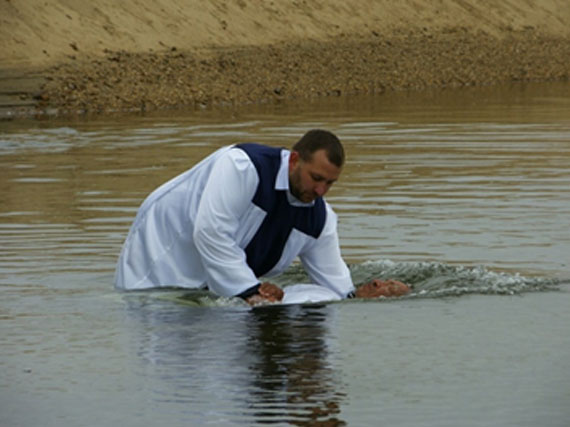
In the New Testament, John the Baptist baptized his followers and Jesus by immersing them completely under the water and then bringing them back up again out of the water (Matthew 3:6-16, Mark 1:5-9; Luke 3:7-21; John 1:25-33, 3:23; Acts 1:5, 11:16, 19:4). Jesus and his disciples also baptized people who believed in Jesus (Mark 16:16; John 3:22, 4:1-2; Acts 2:38-41, 8:12-16, 36-38, 9:10,18; 10:47-48, 11:16, 16:15, 33, 18:8, 19:5, 22:16; Romans 6:3; 1 Corinthians 1:14-17, 12:13; Galatians 3:27). Today, there are three major views on the nature of baptism among Christian denominations.
The sacramental view.
According to the sacramental view, baptism is a means by which God conveys grace, forgives sins, and regenerates or gives a new nature and an awakened or strengthened faith. Both Roman Catholics and Lutherans hold this view of the nature of baptism.
The traditional Roman Catholic doctrine emphasizes that the sacrament of baptism itself has the power to convey grace. It is not the water but the sacrament as established by God and administered by the church that produces this change.
Lutherans, on the other hand, focus on the faith that is present in the person being baptized. They also emphasize the value of teaching the Bible, which awakens faith in a believer by entering the ear to strike the heart. Baptism also enters the eye to reach and move the heart.
Advocates of the sacramental view of baptism rely on Jesus’ statement, “Unless one is born of water and the Spirit, he cannot enter the kingdom of God” (John 3:5 NKJV). They also believe that the act of baptism itself produces a change in the life of the Christian.
The covenantal view.
According to the covenantal view, baptism is not a means by which salvation is brought about, but as a sign and seal of God’s covenant as God’s pledge to save humankind. Because of what God has done and promised, God forgives and regenerates. On the one hand, baptism is a sign of the covenant. On the other, it is the means by which people enter into that covenant.
The benefits of God’s covenant are granted to all adults who receive baptism and to all infants who, upon reaching maturity, remain faithful to the vows made on their behalf at baptism. The covenant, rather than the sacrament or another person’s faith, is seen as the means of salvation; and baptism is a vital part of this covenant relationship.
In the covenantal view, baptism serves the same purpose for New Testament believers that circumcision did for Jewish Old Testament believers. For the Jews, circumcision was the external and visible sign that they were within the covenant that God had established with Abraham. Converts to Judaism (or proselytes) also had to undergo this rite. But now under the new covenant in the New Testament, Christian baptism is required instead of circumcision.
Old Testament circumcision refers to a cutting away of sin and a change of heart (Deuteronomy 10:16; Ezekiel 44:7, 9). Similarly, Christian baptism also depicts a washing away of sin (Acts 2:38; Titus 3:5) and a spiritual renewal (Romans 6:4; Colossians 2:11–12). In addition, circumcision and baptism are connected: “In Him you were also circumcised with the circumcision made without hands, by putting off the body of the sins of the flesh, by the circumcision of Christ, buried with Him in baptism, in which you also were raised with Him through faith in the working of God, who raised Him from the dead” (Colossians 2:11-12 NKJV).
The symbolic view.
According to the symbolic view, baptism is symbolic in that baptism does not cause an inward change or alter a person’s relationship to God in any way. Instead, baptism is a symbol, sign, or an outward indication, of the inner change that has already occurred in the Christian’s life. It serves as a public identification of the person with Jesus Christ and a public testimony of the change that has already occurred. It is an act of initiation into the Christian church, not an initiation into the Christian life. There is a difference between the invisible or universal church, which consists of all Christians, and the visible or local church, a gathering of Christians in a specific place.
The church practices baptism and the Christian submits to it because Jesus commanded that this be done and Jesus gave us the example by being baptized himself. Therefore, baptism is an act of obedience, commitment, and proclamation, symbolizing the Christian’s identification with Christ in his death, burial, and resurrection. As the apostle Paul explained, “Or do you not know that as many of us as were baptized into Christ Jesus were baptized into His death? Therefore we were buried with Him through baptism into death, that just as Christ was raised from the dead by the glory of the Father, even so we also should walk in newness of life” (Romans 6:3-4 NKJV).
No transformational spiritual benefit occurs because of baptism. Rather than producing regeneration of faith, baptism always comes after faith and the salvation that faith produces. The main spiritual values of baptism are that it is a public statement of a Christian’s faith and establishes membership in the church where the Christian can experience fellowship and grow in faith with other Christians.
Who should get baptized?
Another issue over which Christian denominations disagree is the question of who should be baptized? Should only those who have come to a personal, conscious decision of faith and trust in Jesus Christ as the Savior and Lord be baptized? Or, should children be baptized? And if children should be baptized, should all children, or only the children of believing parents, be baptized?
Infant and children baptism.
Christian denominations that practice baptism of infants baptize not only infants, but also adults who have come to faith and trust in Christ. One of the arguments in favor of baptizing infants is that entire households were baptized in the early New Testament church (Acts 16:15, 33). Most likely, such households or families included children. Consequently, denominations that hold this position believe this practice should be extended to the present day.
A second argument for infant and children baptism is Jesus’ treatment of children. Jesus commanded the disciples to bring the children to Him. When they did so, he blessed them (Mark 10:13–16).
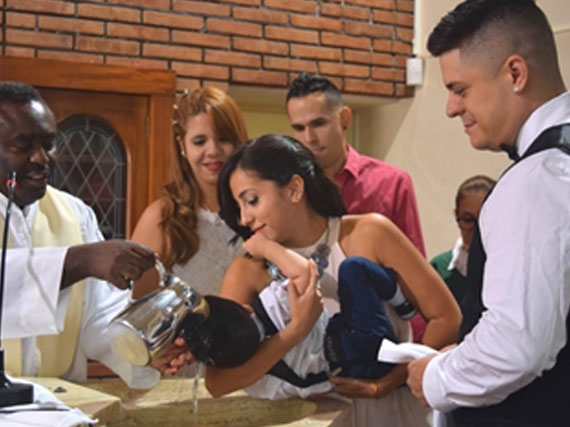
Because of this example from Jesus, it would seem inconsistent to deny baptism to infants and older children today.
A third argument for infant and children baptism proposed by covenant theologians is that infants and older children were Jewish participants in the Old Testament covenant: “And I will establish My covenant between Me and you and your descendants after you in their generations, for an everlasting covenant, to be God to you and your descendants after you” (Genesis 17:7 NKJV). These covenant Jews were present when the covenant was renewed (Deuteronomy 29:10–13; Joshua 8:35). They had a standing in the congregation of Israel and were present in their religious assemblies (Joel 2:16). The promises of God were given to children as well as adults (Isaiah 54:13; Jeremiah 31:34). Circumcision was administered to infants in the Old Testament (Gen. 17:12). Since baptism has now replaced circumcision, baptism should be administered to infants and older children.
Those who believe in baptismal regeneration (Roman Catholics especially) argue that baptism of infants is necessary. In traditional Roman Catholic teaching, unbaptized infants who die cannot enter heaven in this state, but are instead consigned to a state of limbo. If this fate is to be avoided, they must be baptized in order to remove the guilt of their sins and receive new life.
Although Lutherans also believe in baptismal regeneration, they are not as certain that God’s grace is communicated through the sacrament of baptism. Lutherans believe that God may have some method, perhaps not yet revealed to us, of producing faith in the unbaptized. But this, if it is true, would apply only to children of believers. Lutherans are careful to affirm that the exact process of baptismal regeneration is a mystery, known only to God.
A final argument in support of infant and children baptism is the historical evidence of church tradition and practice. Infant baptism has been practiced in the church from as early as the second century.
An issue that divides those denominations that practice infant and children baptism is the question of which infants should be baptized. In general, the covenant theologians (Presbyterians, Lutherans, and the various Protestant Reformed groups) insist that only the children of believing parents (thus, members of the covenant) should be included. Roman Catholics, however, generally baptize even infants and children whose parents have not made such a commitment. These different positions on infant and children baptism show how these denominations feel about the role of personal faith in one’s salvation.
For Roman Catholics, this question of personal faith presents no real difficulty, since they believe the sacrament of baptism has power in itself to bring about salvation. The only faith necessary is that someone has enough faith to bring and present the child. Faith is also necessary for the person administering baptism. He must believe that the sacrament has saving power.
Lutherans and many other non-Reformed Protestant denominations, however, with their strong emphasis on faith as the means of salvation, face a more difficult problem. It is clear that an infant does not have faith. One way of resolving this problem is to resort to the concept of unconscious faith. Reasoning power and self-consciousness must not be thought of as faith. Martin Luther observed that people do not cease to have faith when they are asleep or preoccupied or working strenuously. Therefore, Lutherans believe the Bible teaches the implicit faith of infants (Matthew 18:6; Luke 1:15; 1 John 2:13). If Jesus could speak of “these little ones who believe in Me” (Matthew 18:6), and if John the Baptist was filled with the Holy Spirit even from his mother’s womb, then little children can have implicit faith. Lutherans also believe that the faith necessary for the salvation of children can be communicated through their parents.
For covenant theologians, the problem of the faith of infants and older children is not a difficult issue because their faith and salvation are potential faith and salvation. God promises to give the benefits of baptism to all adults who receive it by faith. This same promise is extended to all infants and children who, when they grow to maturity, remain faithful to the vows that were made on their behalf at the time of their baptism. In this potential faith view, baptism’s saving work depends on the faith that will be, rather than upon the faith that is.
Believer’s baptism.
According to the believer’s baptism view, baptism should be restricted to those who actually exercise faith. This approach excludes infants and very young children, who could not possibly have such faith. The proper candidates for baptism are those who already have experienced the new birth on the basis of their personal faith and who give evidence of this salvation in their lives.
The believer’s baptism view is the view that is best supported by the evidence in the New Testament. In every instance of New Testament baptism in which the specific identity of the persons was known, the persons being baptized were adults. Further, the condition required for baptism was personal and conscious faith. Without this faith, baptism was not administered. This is especially evident in the book of Acts and Matthew’s gospel (Acts 2:37-41, 8:12, 8:26-40, 10:47, 18:8, 19:4-5; Matthew 3:2-6, 28:19). In the New Testament church, repentance and faith came first, followed by baptism.
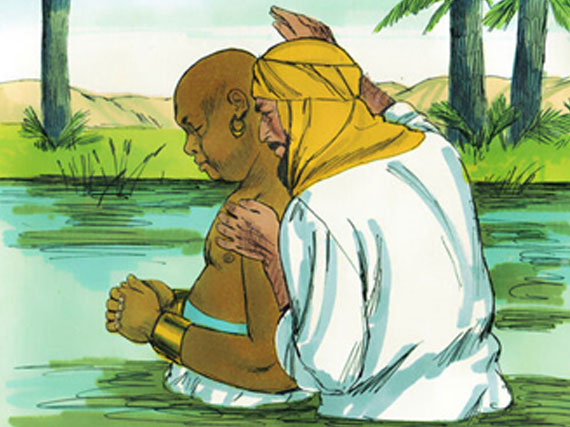
Philip baptizing the Ethiopian official (Acts 8:26-40). Free Bible Images.
In response to the argument for infant baptism based on households getting baptized, Christians that hold the believer’s baptism view point out that Paul spoke the word to the Philippian jailer and all the people in his house. And the jailer “rejoiced, having believed in God with all his household” (Acts 16:34 NKJV). Crispus, the synagogue ruler, also “believed on the Lord with all his household” (Acts 18:8 NKJV). These passages do not state specifically that infants were included among those baptized. All the people in these households could have been adults or children that could believe and trust in Jesus.
In response to the argument for infant baptism based upon Jesus’ blessing of the children, Christians that hold the believer’s baptism view point out that when Jesus blessed children, he did not mention
baptism or simply that these children should get baptized. Jesus was simply explaining that these children illustrate simplicity and trust, like that which all believers should display. Jesus blessed the children, but that was not baptism. Many Christian denominations and churches that hold to and practice believer’s baptism practice what is known as child dedication, in which the parents dedicate the child before the church congregation and promise to raise the child as a Christian and the church congregation promises to support the parents to raise the child within the Christian community of the church.
Christians that hold to believer’s baptism generally allow children to get baptized at about 10 years old or the fourth grade, when the children can make their own decision to become a Christian and demonstrate and communicate to the parents and the church congregation that the children understand what being a Christian and baptism means and why they should get baptized.
Age of accountability.
Christians that hold to believer’s baptism believe that there is an “age of accountability” in which children are held accountable to God for their sin and need to accept Jesus Christ as their Savior and Lord to have an eternal relationship with God. God did not state a specific age that a child is responsible for sin and rejecting God, most likely, because Children mature at different paces or rates. You can be assured that God knows each child’s heart and soul and will judge the child correctly with grace and mercy. Children that die before the age of accountability go to be with God in heaven. There are two main Bible passages that biblically support the age of accountability view. First, when God struck David’s child with illness, David pleaded with God for the child. David also fasted and wept while the child was alive. Seven days after the child died, David stopped fasting and said, “Who can tell whether the LORD will be gracious to me, that my child may live? But now that he is dead; why should I fast? Can I bring him back again? I shall go to him, but he shall not return to me” 2 Samuel 12:22-23 (NKJV). David was expecting to go to his child in the future in heaven to be reunited with his child. The context of the second passage in support of the age of accountability is when the prophet Isaiah prophesied that God would give Israel a sign that a virgin shall conceive a Son (Jesus), and shall call his name Immanuel (which means God is with us). Then Isaiah describes the Son, “Curds and honey He shall eat, that He may know to refuse the evil and choose the good. For before the Child shall know to refuse the evil and choose good, the land that you dread will be forsaken by both kings” (Isaiah 7:14-16 NKJV). So here God states that it will take time for a child to reach an age of accountability when the child can refuse evil and choose good. Therefore, there is an age of accountability at which a child will know good and evil and be held accountable for either accepting or rejecting God, Jesus Christ, and the Holy Spirit.
The form of baptism.
The last major issue regarding baptism is the method or form of baptism. Whether a Christian should be baptized by immersion in water, pouring, or sprinkling. On this issue, Christian denominations fall into two major camps-those that insist upon the exclusive use of immersion, and those that permit and practice other forms or methods of baptism.
Baptism by only immersion.
Some Christian denominations insist that immersion is the only valid form of baptism. One of their strongest arguments stems from the Greek word for baptism in the New Testament. The word baptize is derived from the Greek word “baptizo” and means to “dunk,” “dip,” “plunge,” “submerge,” or “immerse” something in water. But there are also other arguments that strongly suggest that immersion was the form of baptism used in the early church.
The Didache, a manual of Christian instruction written in AD 110–120, stated that immersion baptism should be used generally and that other forms of baptism should be used only when immersion was not possible.
In addition, the situations involved in some of the biblical accounts of baptism imply immersion. For example, John the Baptist was baptizing in Aenon near Salim, “because there was much water there” (John 3:23 NKJV). Jesus apparently went down into the water to be baptized by John (Matt. 3:16). The Ethiopian said, “See, here is water. What hinders me from being baptized?” (Acts 8:36 NKJV).
The biblical symbolism involved in baptism supports that baptism by immersion. Romans 6:4-6 identifies baptism with the believer’s death (and burial) to sin and resurrection to new life, as well as the death and resurrection of Jesus Christ. Baptism illustrates a person being buried with Jesus (submersion under water) and being raised to new eternal life with Jesus (emergence from water) by the Holy Spirit. Only immersion adequately depicts this meaning of baptism.
Baptism by different forms or methods.
Christian denominations that allow baptism by different forms or methods believe that immersion in water, pouring, and sprinkling are all appropriate forms of baptism. They point out that the Greek word for baptism in the New Testament is sometimes ambiguous in its usage. While its most common meaning in classical Greek was to “dunk,” “dip”, “plunge,” “submerge,” or “immerse” something in water, it also carried other meanings as well. Therefore, the issue regarding whether only immersion or different forms or methods of baptism are allowed cannot be resolved by considering the meanings of the Greek word for baptism.
The denominations that allow baptism by different forms or methods also argue from inference that immersion must not have been the exclusive method used in New Testament. For example, was John physically capable of immersing all the persons who came to him for baptism? Did the Philippian jailer leave his jail to be baptized? If not, how would he have been immersed? Was enough water for immersion brought to Cornelius’ house? Or, did the apostle Paul leave the place where Ananias found him in order to be immersed?
Christian denominations that practice baptism by sprinkling or pouring also point out that immersion may not be the best form or method for showing what baptism really means. They see the major meaning of baptism as purification. They point out that the various cleansing ceremonies in the Old Testament were performed by a variety of means: immersion, pouring, and sprinkling (Mark 7:4; Hebrews 9:10). Also, there was a close association between baptism and the outpouring of the Holy Spirit, which was from God above. Therefore, true baptism requires the symbolism of pouring rather than immersion.
Baptism with the Holy Spirit and fire.
John the Baptist described the work of Christ as, “He [Christ] will baptize you with the Holy Spirit and fire” (Matthew 3:11 NKJV; Luke 3:16 NKJV). Some scholars believe that two different baptisms are mentioned here: “the baptism of the Holy Spirit” (the baptism that brings mercy, forgiveness, and life) and “the baptism of fire” (the baptism that brings judgment, condemnation, and death). Under this interpretation, the baptism of the Holy Spirit refers to the present age of grace and the baptism of fire refers to a future age of judgment.
Other scholars believe that John is only referring to one baptism: Christ baptizes “with the Holy Spirit and fire” refers to the experience of the Day of Pentecost when “there appeared to them divided tongues, as of fire, and one sat upon each of them. And they were all filled with the Holy Spirit” (Acts 2:3-4 NKJV). These scholars see this baptism as a reference to the work of the Holy Spirit in purifying God’s people.
Resources for baptism.
This baptism website page is based upon the following resources:
Youngblood, R. F., Bruce, F. F., & Harrison, R. K., Nelson’s New Illustrated Bible Dictionary (Nashville, TN: Thomas Nelson, 1995).
Wayne Grudem, Systematic Theology: An Introduction to Biblical Doctrine (Grand Rapids, MI: Zondervan, 1994, Appendix 6 and glossary copyright 2000), 966-987.
Charles Stanley, The Glorious Journey: Insight, Encouragement, and Guidance for Your Walk of Faith (Nashville, TN: Thomas Nelson, 1996), 3-6.