

Just as every watch requires a watchmaker, the designed universe and life within the universe require an intelligent designer.

- Every design has a designer.
- The universe and life within the universe have complex design based on information.
- Therefore, the universe and life within the universe must have a designer.
- Given the high level of complexity and information in the universe and life, the designer must be incredibly intelligent.
- This designer must be eternal, meaning the designer is uncaused.
- This designer must be timeless.
- This designer must be nonmaterial.
- This designer must be powerful.
- This designer must be intentional.
- This designer has the attributes of what we normally call God.
- IF THERE IS DESIGN, THERE MUST BE A DESGINER.
EVIDENCE IN SUPPORT OF THE INTELLIGENT DESIGN (TELEOLOGICAL) ARGUMENT
Cells are microscopic factories that are made of proteins that are like worker molecules that carry out many key biological functions. The building blocks of life at the molecular level are similar to the language components of a book. Amino acids (20 common amino acids) are like individual letters (26) of the alphabet. These amino acids combine to create various proteins, which are like words and sentences. Theses multi-protein molecular machines are like words and sentences that form paragraphs.
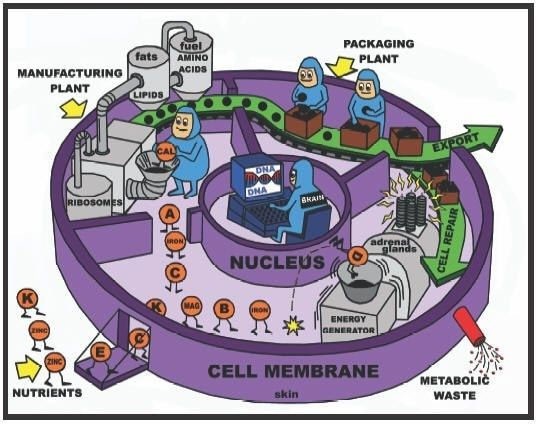
The cell is structured and operates like a microscopic factory.
Each cell in the body is intelligently designed.
Molecular machines coordinate to form major cellular systems just as paragraphs are arranged together to form chapters of a book. Hundreds, if not thousands, of molecular machines form a living cell or cellular system, just as many chapters form a book. These molecular machines within the cell produce proteins, transport parts within the cell, produce energy, dispose waste, replicate, repair, and protect the cell from elements outside of the cell. Two machines are found in all living cells. The Ribosome machine translates instructions to assemble proteins. The ATP (adenosine triphosphate) Synthase machine is the primary energy-carrying molecule in all cells. As you can see, even the most basic cell is highly complex and requires information and instructions on how to use the information to assemble and operate a cell. Gary Kemper, Hallie Kemper, Casey Luskin, Discovering Intelligent Design-A Journey into the Scientific Evidence, (Seattle, WA: Discovery Institute Press, 2013), chapter 7; Stephen C. Meyer, Return of The God Hypothesis: Three Scientific Discoveries That Reveal the Mind Behind the Universe, (New York, NY: Harper Collins Publishers, 2021), chapters 9, 10, and 14. This high level of complexity is clear and convincing evidence of intelligent design.
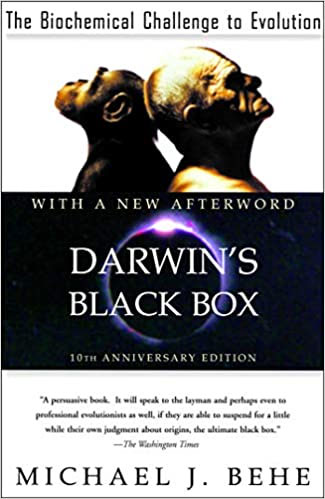
Darwin’s Black Box by Michael J. Behe.
Michael J. Behe, a professor of biochemistry at Lehigh University in Pennsylvania and a senior fellow of the Discovery Institute‘s Center for Science and Culture, has articulated and presented the case for “irreducible complexity,” which is a system with a series of parts in which the removal of any part causes the entire system to cease functioning. The presence of irreducibly complex molecular machines in many biochemical systems indicates that they must be the result of intelligent design rather than evolutionary processes. Much like a spring-loaded bar mousetrap cannot function unless all of its component parts are fully constructed and assembled, molecular machines cannot function unless all of their component parts are fully constructed and assembled at the time they were created. “Darwin’s Black Box” refers to the internal operations and functions of a simple cell, cellular structure, and other aspects of microbiology that were not much understood when Charles Darwin was alive.
Subsequent scientific discoveries confirm the irreducible complexity of several biological systems, including but not limited to, the cilium, the bacterial flagellum, blood clotting, the immune system, and vesicular transport. Blind macroevolution cannot build the complex machinery that are essential for life to exist. Rather, microevolution works principally by breaking things for short-term benefit. It can’t construct anything fundamentally new. Michael J. Behe, Darwin’s Black Box: The Biochemical Challenge to Evolution, (New York, NY: Simon & Schuster Free Press, 10th Anniversary ed., 2006), Michael J. Behe, A Mousetrap for Darwin, (Seattle, WA: Discovery Institute Press, 2020); Stephen C. Meyer, Return of The God Hypothesis: Three Scientific Discoveries That Reveal the Mind Behind the Universe, (New York, NY: Harper Collins Publishers, 2021), chapters 8, 9, and 14.
DNA stores genetic information to build proteins and molecular machines.
All living organisms carry biological information in DNA, which is the hereditary molecule that carries genes. A gene is a section of DNA that contains the assembly instructions for a particular protein. The information in DNA is stored by the ordering of four molecules: adenine (A), cytosine (C), thymine (T), and guanine (G). These molecules are called nucleotide bases. They are combined with sugar molecule (ribose) and a phosphate group to form a nucleotide. The ordering of nucleotides makes DNA a digital code. The biochemical language of DNA uses strings of three nucleotide bases (called condons) as start and stop commands to construct proteins. An actual DNA sequence might continue for hundreds or even thousands of codons, which encode amino acids in proteins. The unlikely ordering of the nucleotide bases to match the pattern of biochemical language represents specified complexity, which is clear and convincing evidence of design. In addition, the stable double-helix shape of DNA, only pairs A with T, and C with G, called base pairs. The sequential ordering of base pairs in DNA instructs cellular machinery to link amino acids in the correct order and shape to produce functional proteins. These molecular machines in the cell, such as ribosome, interpret the instructions in DNA and execute them. Kemper, Discovering Intelligent Design, 85-87.
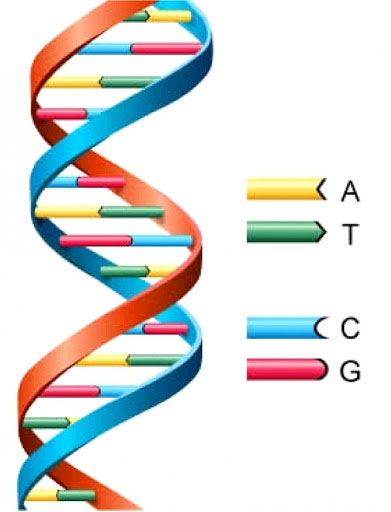
DNA and nucleotide base molecules: adenine (A), cytosine (C), thymine (T), and guanine (G).

The DNA molecule functions like a computer hard drive by serving as a physical structure that stores genetic information (software) with instructions for building proteins, which form molecular machines.
As computers use software that contains information (programing instructions), and hardware that executes the programmed commands, the cells use DNA to store biological genetic information with instructions for building proteins, and molecular machines to carry out those instructions and perform cellular functions. Even atheist biologist Richard Dawkins admits that “[t]he machine code of the genes is uncannily computer-like.” Richard Dawkins, River Out of Eden: A Darwinian View of Life, (New York, NY: Basic Books, 1995), 17. In addition, Microsoft founder Bill Gates recognized, “Human DNA is like a computer program but far, far more advanced than any software we’ve ever created.” Kemper, Discovering Intelligent Design, 85-86; Stephen C. Meyer, Return of The God Hypothesis: Three Scientific Discoveries That Reveal the Mind Behind the Universe, (New York, NY: Harper Collins Publishers, 2021), chapters 9 and 14.
At the end of the nineteenth century, most biologists thought life consisted solely of matter and energy. But after the scientific discovery in 1953 of DNA as a repository of information, scientists needed to explain where this information came from. Physicist Stephen C. Meyer, a leading proponent of the theory of intelligent design, describes the mystery of what he calls, “the DNA enigma,” which is the discovery of digital code in DNA that has confounded repeated attempts to explain the origin of first life on Earth. Meyer used the same method of scientific reasoning that Charles Darwin and his mentor geologist Charles Lyell used: the inference to the best hypothesis explanation from previously known causes now in operation. Meyer recognized that the cause now in operation that produces digital code that contains information is an intelligent mind or intellect. Applying this information theory to molecular biology, the creation of new information is habitually associated with conscious activity. In our uniform and repeated experience, it is conscious intelligent activity which is the best explanation for what generates information. Stephen C. Meyer, Signature in the Cell: DNA and the Evidence for Intelligent Design, (New York, NY: Harper Collins Publishers, 2009), chapters 3-5; Stephen C. Meyer, Return of The God Hypothesis: Three Scientific Discoveries That Reveal the Mind Behind the Universe, (New York, NY: Harper Collins Publishers, 2021)., chapters 9 and 14. This generation and infusion of new information in molecular biology is clear and convincing evidence of intelligent design, which is consistent with the existence of a God who transcends the universe, is intelligent, and is active in the biological life in the universe that God creates, sustains, and upholds.
Microevolution verses microevolution.
When investigating evolution, it is important to distinguish between microevolution versus macroevolution. Microevolution involves small-scale changes in a population of organisms. No new organism is created. Essentially all scientists agree that microevolution occurs over time. Macroevolution involves large-scale changes in populations of organisms, including the evolution of fundamentally new biological features that may create a new organism. Macroevolution also means that all life-forms descended from a single common ancestor through unguided natural processes. This is typically illustrated by the “Tree of Life”. Proponents of macroevolution take evidence for microevolution and then claim it demonstrates macroevolution. In recent years, over 1,000 PhD scientists have contested the validity of macroevolution because the extrapolation of microevolution into macroevolution is not warranted. These scientists have signed the following statement, “We are skeptical of claims for the ability of random mutation and natural selection to account for the complexity of life. Careful examination of the evidence for Darwinian theory should be encouraged.”For a list of over 1,000 PhD scientists that have signed the Statement of Scientific Dissent from the Darwinian theory of macroevolution, see https://dissentfromdarwin.org/.
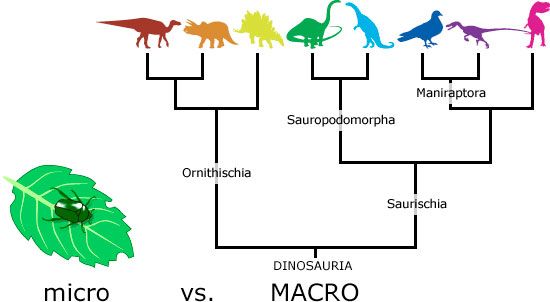
Microevolution small-scall change of an organism versus macroevolution large-scale change of an organism that creates a new organism.
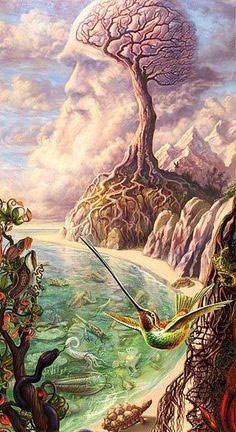
Charles Darwin’s Theory of Evolution.
Darwin’s Theory of Evolution.
Charles Darwin’s Theory of Evolution involves at least three steps. First, random genetic mutations over time cause change in an organism. Second, unguided natural selection preserves that change that makes the organism better suited to survive in future generations. Third, the descent of life from a common ancestor. Current day evolutionists claim that evolution is capable of developing complex new traits in organisms and accounts for almost all of biological evolution. In recent years, scientists have questioned the validity of the theory of macroevolution. Darwin himself proposed a test for evolution when he proposed, “If it could be demonstrated that any complex organ existed which could not possibly have been formed by numerous, successive, slight modifications, my theory would absolutely break down.” Charles Darwin, The Origin of Species by Means of Natural Selection, (1859), chapter 6. Darwin’s followers updated his theory and called it neo-Darwinism, which states that all life shares common ancestry, and evolved through descent with modification, driven by unguided natural selection acting upon random genetic mutations in DNA over long periods of time. They contend that humans first appeared on the Earth about 1 million years ago.
Genetic entropy refutes macroevolution.
The genome is the instruction manual encoding all the information needed for human life. None of the information systems designed by man can even begin to compare to the sophistication and complexity of the genome. The DNA letters, clusters of DNA words, and DNA gene chapters combine to form chromosome manual volumes which, in turn, form the whole genome library. The amount of information of a complete genome consists of two sets of 3 billion individual letters each. But the genome’s set of instructions is not a simple, static, linear array of letters. It is dynamic, self-regulating and multi-dimensional.
One problem with neo-Darwinism macroevolution is that biological organisms contain many complex features that cannot be formed through numerous, successive, slight (small-scale) modification.
Each animal is programmed to develop and become that specific type of animal. This programing is different than the programing for humans to develop and become humans. All this information is in a genomic package contained within a cell’s nucleus, which is a space much smaller than a speck of dust. Each human body has a galaxy of more than 100 trillion cells. Every one of these cells has a complete set of instructions, directing the cell’s own highly-prescribed duties. Where did all this information come from, and how can it possibly be maintained? This is what Cornell University geneticist Dr. John C. Stanford calls, “the mystery of the genome.” John C. Stanford, Genetic Entropy & The Mystery of the Genome, (Longmeadow, MA: FMS Publications, 2014), chapter 1. Neo-Darwinian’s answer is that random mutation at the molecular level and natural selection have created all biological information. But random mutations are typographical errors in the book of life that consistently destroy information and cause aging, cancer, and other degenerative genetic diseases. This “Genetic Entropy” or genetic degeneration occurs because the true distribution of mutations argues against mutations, leading to a net gain in information needed to advance the process of macroevolution. Specifically, mutations systematically erode the information that encodes life’s many essential functions. Stanford, Genetic Entropy, chapter 2. Even if some mutations were beneficial to life, natural selection does not involve any intelligence or design; it is a blind and purposeless process whereby some things reproduce more than others. In addition, mutations are complex and happen at the molecular level, but natural selection can only be carried out on the level of the whole organism. So it would have to select an organism that contained all of the beneficial mutations. Stanford, Genetic Entropy, chapter 1. But where did this organism with all the beneficial mutations come from? In other words, natural selection only attempts to explain the survival of the fittest, not the arrival of the fittest.
For updated information on the topic of Genetic Entropy, visit the website www.GeneticEntropy.org/.
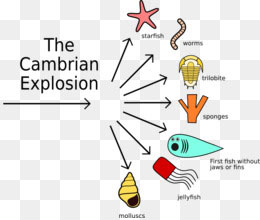
The Cambrian Explosion is the relatively sudden appearance in the fossil record of most major animal body plans about 543 million years ago.
The “Cambrian Explosion” refutes macroevolution.
Another problem with neo-Darwinism is the sudden appearance of animal life during the “Cambrian Explosion,” which is the sudden appearance and rapid diversification of most major living animal body plans (phyla) in the fossil record within an interval of about 5 to 10 million years or less, a relatively short period in evolutionary history. For the first time, body plans with complex biological structures such as compound eyes, spinal cords, articulated limbs, and skeletons appeared on Earth. This time is known as the Early Cambrian, and began around 543 million years ago. This time interval is recorded by some excellent fossil deposits that include superbly preserved fossils of these early animals. Two famous examples are the Burgess Shale in Canada, and the Chengjiang in China.
Darwin’s “dilemma” or “doubt”.
Darwin’s “dilemma” or “doubt” refers to the Darwin’s concern that the fossil record contradicted macroevolution. Darwin hypothesized that if macroevolution were true, “it is indisputable that before the lowest Cambrian stratum was deposited … the world swarmed with living creatures.” But Darwin admitted that the fossil record below the Cambrian strata did not appear to contain such creatures. Instead, “species belonging to several of the main divisions of the animal kingdom suddenly appear in the lowest known fossiliferous rocks” without any evidence of prior transitional ancestral forms. Darwin acknowledged that this lack of ancestral forms was “a valid argument” against macroevolution. He recognized the objection that “the distinctness of specific forms, and their not being blended together by innumerable transitional links-is a very obvious difficulty.” He hoped and predicted that with time and additional research, these missing transitional ancestral forms would be found in the fossil record. However, since 1859, fossil discoveries have not found any transitional ancestral forms. Therefore, the fossil record does not depict an ancestral animal tree of life of simple animals evolving from a common ancestor into more complex animals. Instead, it depicts that complex animals appear suddenly as if complex life exploded and first appeared in the Cambrian Explosion. The fossil record looks more like a lawn in which each blade of grass representing 8 major living animal body plans (phyla) appear at about the same time. Specifically, the animal kingdom has about 36 phyla in the history of life. About 26 to 27 phyla are fossilized. 20 phyla first appear in the Cambrian Explosion. Charles Darwin, The Origin of Species By Means of Natural Selection, (1859), fifth edition, chapter 6, 301, 378-381; Stephen C. Meyer, Darwin’s Doubt: The Explosive Origin of Animal Life and the Case for Intelligent Design, (New York, NY: Harper Collins Publishers, revised edition, 2013), chapters 1-8; Illustra Media Documentary, Darwin’s Dilemma: The Mystery of the Cambrian Fossil Record, (2009); Meyer, Darwin’s Doubt, chapters 9-14, Meyer, Return of The God Hypothesis, chapters 10 and 14.
In addition to the mystery of the missing transitional fossils in the Cambrian Explosion, Darwin and neo-Darwinists also fail to explain the mystery of the process by which all of the complexity in the first animals came about. Macroevolution holds that complex animal life forms would develop by numerous, successive, slight modifications, over long periods of time. But the fossil record shows the abrupt appearance of these complex animal life forms with no transitional ancestral life forms from simple to complex. There was not enough time for the necessary genetic mutations to occur that would develop the complex biological structures. Meyer, Darwin’s Doubt, chapters 9-14); Stephen C. Meyer, Return of The God Hypothesis: Three Scientific Discoveries That Reveal the Mind Behind the Universe, (New York, NY: Harper Collins Publishers, 2021), chapters 10 and 14.
Icons of macroevolution.
Most people believe the theory of macroevolution is fact because their school science biology textbooks essentially teach that the current scientific consensus is that overwhelming evidence establishes macroevolution is fact without any criticism of macroevolution. Since textbooks use the same examples and images so often, these examples and images have achieved the status of “icons” of macroevolution. However, these icons misrepresent the evidence and do not provide credible evidence in support of macroevolution. Biologists have known this for decades and these icons should have been removed from the textbooks, but many of these icons still appear in biology textbooks. These false icons are as follows.
Icons of Evolution by Jonathan Wells.
“The Miller-Urey Experiment: A 1953 experiment that supposedly showed how chemical building blocks of life could have formed spontaneously on the early Earth
Darwin’s Tree of Life: A branching tree diagram used to illustrate the notion of descent with modification of all living things from common ancestors;
Homology in Vertebrate Limbs: Similarities in limb bones used as evidence that all vertebrates (animals with backbones) are all descended from a common ancestor
Haeckel’s Embryos: Drawings of similarities in early embryos used as evidence that all vertebrates (including humans) evolved from fish-like animals;
Archaeopteryx: A fossil bird with teeth in its mouth and claws on its wings, often cited as the missing link between ancient reptiles and modern birds;
Peppered Moths: Photos of moths resting on tree trunks, supposedly providing evidence for evolution by natural selection;
Darwin’s Finches: Thirteen species of finches on the Galapagos Islands that are used as evidence for the origin of species by natural selection;
Four-Winged Fruit Flies: Fruit flies with an extra pair of wings that supposedly provide evidence that DNA mutations provide the raw materials for macroevolution
Fossil Horses: Fossils once used to show that evolution proceeds in a straight line and later used to show that it doesn’t; and
The Ultimate Icon: Drawings of ape-like creatures evolving into humans, used to show that we are just animals produced by purposeless natural causes.”
No complete “transitional form” fossil has ever been found to link ape-like ancestors to hominids or human beings. So some evolutionists have produced the fossils they cannot find. While evolutionists present much of their finds as if they were compelling and authentic evidence of human evolution, many times they base their conclusions on speculative and flimsy “finds.” Many of these finds of alleged hominids consist of only a mouth fragment, a leg bone, a hip bone, or a knee joint. From this alone, they construct a hominid and present it to the public as a fact. Some of these finds have turned out to be those of a pig, donkey, or the result of a hoax. Evolutionists have used these finds to contend that humans first appeared on the Earth about 1 million years ago. The following ape-like creatures have been shown to be archaeological forgeries.
Neanderthal Man: In 1856, evolutionists claimed they discovered first specimens of primitive ape-men in the Neander Valley. Subsequent archaeological discoveries, however, revealed that there was no scientific basis to make that claim. Detailed comparisons of Neanderthal skeletal remains with those of modern humans have shown that there is nothing in Neanderthal anatomy that conclusively indicates locomotor, manipulative, intellectual, or linguistic abilities inferior to those of modern humans. In addition, the size of the Neanderthal Man skull, 200 cubic centimeters greater than that of present-day humans, refuted the claim that it was an intermediate form between humans and apes.
Java Man-Peking Man: Fossils discovered on the islands of Java in 1891 and 1892 were given the name Java Man (Pithecanthropus erectus). Fossils discovered near Peking (Beijing) in 1923-1927 were given the name Peking Man (Sinanthropus pekinensis). Java Man and Peking Man were proclaimed as “missing links” to man’s ancestor. In 1939, however, two experts, Ralph von Koenigswald and Franz Weidenreich, revealed that both were actually normal current day human beings. In addition, Ernst Mayr from Harvard University classified both as human in 1944.
Ota Benga: In the early 20th century, some evolutionists searched for ”half-man half-ape” creatures that were “living transitional links” that would prove macroevolution. In 1904, a Pygmy by the name of Ota Benga (which means “friend”) was captured by an evolutionist researcher in the Congo. He had a wife and two children. He was taken to the United States where evolutionist scientists displayed him to the public in the St Louis World Fair in a cage along with other ape species and introduced him as “the closest transitional link to man”. Two years later, he was exhibited at the Bronx Zoo in New York under the denomination of “ancient ancestors of man” along with a few chimpanzees, a gorilla named Dinah, and an orangutan called Dohung. Dr William T. Hornaday, the zoo’s evolutionist director, stated he was proud to have this exceptional “transitional form” in his zoo and treated caged Ota Benga as if he were an ordinary animal. Unfortunately, Ota Benga eventually committed suicide because he was unable to bear being treated as a zoo animal.
Piltdown Man: In 1912, Charles Dawson claimed that he had found a jawbone and a cranial fragment in a pit in Piltdown, England. Even though the jawbone was more ape-like, the teeth and the skull were like a man’s. These specimens were labelled the “Piltdown man.” For more than 40 years, museums and scientific articles alleged the Piltdown man bones to be 500,000 years old as an absolute proof of human evolution. In 1949, fluorine testing, used for determining the date of fossils, revealed that the jawbone of Piltdown Man did not contain any fluorine. This indicated that it had remained buried no more than a few years. The skull, which contained only a small amount of fluorine, showed that it was not older than a few thousand years old. It was determined that the teeth in the jawbone belonging to an orangutan and that the “primitive” tools discovered with the fossils were simple imitations that had been sharpened with steel implements. This forgery was revealed to the public in 1953. The skull belonged to a 500-year-old man, and the jawbone belonged to a recently deceased ape. The teeth had been specially arranged in a particular way and added to the jaw, and the molar surfaces were filed in order to resemble those of a man. Then all these pieces were stained with potassium dichromate to give them an old appearance. These stains began to disappear when dipped in acid. Thereafter, Piltdown man was removed from the British Museum.
Nebraska Man: In 1922, Henry Fairfield Osborn, the director of the American Museum of Natural History, claimed he had found a fossil molar tooth belonging to the Pliocene period in western Nebraska near Snake Brook. This tooth allegedly bore common characteristics of both man and ape, and was called “Nebraska man.” A scientific debate followed, in which some interpreted this tooth as belonging to Pithecanthropus erectus, while others claimed it was closer to human beings. Nebraska man was also immediately given a “scientific name”, Hesperopithecus haroldcooki. Based on this single tooth, reconstructions of the Nebraska man’s head and body were drawn. Moreover, Nebraska man was even pictured along with his wife and children, as a whole family in a natural setting. In 1927, other parts of the skeleton were also found. According to these newly discovered pieces, the tooth belonged neither to a man nor to an ape. It was realized that it belonged to an extinct species of wild American pig called Prosthennops. Thereafter, all the drawings of Hesperopithecus haroldcooki and his “family” were removed from evolutionary literature.
The Taung Child: A fossil skull discovered by Raymond Dart in South Africa in 1924 was initially presented as an alleged ancestor of man. However, contemporary evolutionists can no longer maintain that it represents such an ancestor, because subsequent discoveries revealed that the skull belonged to a young gorilla. The famous anatomist Bernard Wood stated that this fossil constitutes no evidence in favor of evolution in an article published in New Scientist magazine.
Ramapithecus: In the 1930s, a partial jawbone, consisting of two parts, was discovered by G.E. Lewis in India. Evolutionists claimed these two jaw bone fragments were 14 million years old and reconstructed Ramapithecus’ family and supposed natural habitat based on these two jaw bone fragments. For 50 years the fossil was portrayed as an ancestor of man, but following the results of a 1981 anatomical comparison with a baboon skeleton, evolutionists were forced to refute their false conclusions.
Australopithecines: Australopithecines are a group of extinct apes closely related to modern chimpanzees and orangutans. Although many evolutionists use the remains of these extinct apes to try to prove human evolution, the weight of scientific evidence indicates clearly that australopithecines, such as Afarensis (Lucy) and Ardipithecus (Ardi) Australopithecus, were only primeval apes and not the evolutionary ancestors of humankind.
Lucy: In 1974, this alleged fossil of a human female was discovered in Africa. Recently however, it has been revealed that Lucy had an anatomy ideally suited to climbing trees and was no different from other known apes. The French scientific journal Science et Vie covered the story in 1999 under the headline “Adieu, Lucy.” One study, performed in 2000, discovered a locking system in Lucy’s forearms enabling it to walk using the knuckles in the same way as modern-day chimps. In a recent study, Tel Aviv University anthropologists determined that Lucy’s lower jaw bone is some kind of gorilla jaw bone. Other parts of the skeleton are just like the bones of knuckle-dragging, tree-climbing gorillas. Yet creatively designed sculptures of Lucy appeared in tax-funded museums, and these sculptures are hoaxes, not following the obvious ape-like bone structures, but rather dishonestly presenting Lucy as if she had human-like bone structures. This is an example of confirmation bias and presuppositions of evolutionists. Eventually, evolutionary researchers concluded that Lucy should no longer be considered man’s direct ancestor.
Ardi: The Ardi specimen is another example of fragmentary evidence based on reconstructions without a demonstrative mechanism of gradual mutational progression. Evolutionary archaeologists claim to understand how this creature walked (straight legged), what its diet consisted of (without evidence), and how such great changes “must have happened” toward the development of humans and chimpanzees. However, to the contrary, other animal species that existed in Ardi’s day are still alive today with little to no change.
See Jonathan Wells, Icons of Evolution: Science or Myth: Why Much of What We Teach About Evolution Is Wrong, (Washington, DC: Regnery Publishing 2002), chapters 1-11; Jonathan Wells, Zombie Science: More Icons of Evolution, (Seattle WA: Discovery Institute Press, 1st edition, 2017), chapters 1-7; www.IconsofEvolution.com/; www.6000years.org/.
THE BOTTOM LINE ON THE INTELLIGENT (TELEOLOGICAL) DESIGN ARGUMENT
Astronomer Sir Fred Hoyle initially opposed the Big Bang Theory because of the obvious implications of a fine tuner or designer. He later said, “A commonsense interpretation of the facts suggests that a superintellect has monkeyed with physics, as well as with chemistry and biology, and there are no blind forces worth speaking about in nature.” “The Universe: Past and Present Reflections,” Annual Review of Astronomy and Astrophysics, 20 (1982).
In other words, if the universe and life within the universe have complex design based on information, there must be an intelligent designer.
OBJECTIONS TO THE INTELLIGENT DESIGN (TELEOLOGICAL) ARGUMENT
Answer: False. First, since 1953, scientists have determined that the Earth’s early atmosphere was probably very different than the gases that Miller and Urey used. It was most likely composed of carbon dioxide, nitrogen, free oxygen, and only a small amount of hydrogen. There was most likely enough free oxygen present to cause immediate oxidation, destroying any organic compounds in the Miller and Urey’s soup. Second, Miller and Urey selected gases that they thought would most likely produce amino acids and not because they most likely were present on early Earth. So they used their intelligence to select those gases. Third, there are no good ways to get amino acids to link to form genetic “words” or “sentences.” Fourth, amino acids exist in only two shapes that are mirror images: “right” and “left” handed forms. Virtually all life uses only left-handed amino acids to make proteins. But natural processes have no way of separating right-handed from left-hand amino acids. Without the help of complex molecular machines, amino acids would not form functional proteins.
Answer: They did not really create a living cell. First, they read the DNA in a living bacterium cell and stored his information in a computer. Second, they constructed a new strand of DNA containing information they copied from the DNA of the living bacterium cell stored in the computer. Third, they took the DNA strand they copied and inserted it into an existing bacterial cell from a related bacteria species to host a new genome that already had the necessary proteins, cell membrane, and other materials needed to form a living cell. So in reality, they transformed existing life into new life. Without the existing life, they could not have created new life.
Answer: False. First, even in a laboratory, RNA can’t form without the help of a skilled and intelligent chemist guiding the RNA assembly process. Second, RNA does not have the properties to perform all the roles that allow proteins to serve as worker molecules in the cell. Third, the RNA world hypothesis is unable to explain the origin of the information in the first self-replicating RNA molecule. The sudden appearance of such an RNA molecule is exceedingly improbable. Fourth, the RNA world hypothesis can’t explain the origin of the genetic code that matches amino acids to their sequencing instructions to form proteins.
Answer: Theists do not rely on the “God of the gaps” to explain intelligent design. Our uniform experience and common sense dictate that when we observe something that contains information and design, we know that said information and design must come from an intelligent designer, which is consistent with a God that is intelligent and powerful.
Answer: This view is logically contradictory. Macroevolution by definition is not directed by an intelligent mind, so God or some other intelligent being is not involved to direct the process of macroevolution. If God ordained the random operation of the mechanisms of macroevolution, then God is still not doing anything to direct or guide the process. In that case, we should drop the Theistic part of Theistic Evolution and just call it macroevolution or perhaps Deistic Evolution, which means God sets up the random process, but is not involved in the process thereafter. But from a Christian worldview, God is involved as the intelligent creator (Genesis 1:27), designer (Romans 1:20), and sustainer of life (Hebrews 1:3). Therefore, Theistic Evolution is inconsistent with a Christian worldview of God. See J.P. Morland, Stephen Meyer, et al., Theistic Evolution: A Scientific, Philosophical, and Theological Critique, (Wheaton, IL: Crossway, 2017).
Answer: Since Darwin proposed his theory of macroevolution in 1859, subsequent major fossil record deposits in Burgess Shale in Canada, the Chengjiang in China, and offshore ocean floor drill cores containing fossils from oil company rigs have revealed even more complex early animal life forms that suddenly appeared in the Cambrian Explosion that also do not have any ancestral transitional life forms. In other words, since Darwin’s time, the subsequent fossil record finds demonstrate that the Cambrian Explosion was more explosive than Darwin observed, thereby increasing Darwin’s dilemma.
Answer: False. The Chengjiang, China fossils discovered in 1984 provides the most inclusive fossil record of the Cambrian Explosion to date. Just below the Cambrian strata layer of fossils (Pre-Cambrian), biological paleontologists discovered small soft sponge-like fossils that were fossilized about 60 million years before the Cambrian Explosion. Therefore, the fossil record has preserved soft small and soft ancestors and the Artifact Hypothesis is false. If there were hard larger fossils with hard complex biological structures with limbs, skeletons, or shells to confirm macroevelotion in the Pre-Cambrian strata, they would have been discovered. Currently, many leading Chinese and American paleontologists have abandoned the Artifact Hypothesis.
Answer: The fossil record before and in the Cambrian Explosion are also inconsistent with punctuated equilibrium. The Pre-Cambrian species fossil record does not contain a large and diverse pool of competing species to rapidly select and fixate new genetic traits in the Cambrian Explosion. The overwhelming majority of biologists have concluded that punctuated equilibrium requires too much change too quickly to provide a plausible mechanism for producing new traits or forms of animal life. It also eliminates less fit species in competition for survival; it does not generate the traits that distinguish species and establish the basis for inter-species competition. Stephen C. Meyer, Darwin’s Doubt: The Explosive Origin of Animal Life and the Case for Intelligent Design, (New York, NY: Harper Collins Publishers, revised edition, 2013), chapter 7.
Answer: First, even an imperfect intelligent design is still design. Second, in any intelligent design there are trade-offs as to various features and functions depending on the ultimate purposes of the design. For example, in the human eye structure, when both eyes are functional, the brain combines the visual fields of both eyes and compensates for the blind spot. In addition, the position of the optic nerve allows for more blood supply to the vertebrate retinal cells, increasing high quality vision. Recent scientific discoveries have found beneficial and functional aspects for certain vestigial organs. For example, the human appendix functions to provide a storehouse for beneficial bacteria in our intestines that aid in the breakdown of food. In addition, the appendix helps the human immune system by helping to produce white blood cells and plays important roles during fetal development. The tonsils operate in the lymph system to help fight infections. The thyroid gland in the neck is vital for regulating metabolism. The coccyx (tailbone) is an important skeletal structure for the attachment of muscles, tendons, and ligaments that support the bones in our pelvis. Recent and ongoing scientific studies have discovered a variety of functions for virtually all types of junk DNA (pseudogenes), including but not limited to, repairing DNA, assisting in DNA replication, regulating gene expression, aiding in folding and maintenance of chromosomes, controlling RNA editing and splicing, helping to fight disease, and regulating embryological development. See Gary Kemper, Hallie Kemper, Casey Luskin, Discovering Intelligent Design-A Journey into the Scientific Evidence, (Seattle WA: Discovery Institute Press, 2013), chapter 12.
Answer: This objection misstates the main point of irreducible complexity. It is not a problem for irreducible complexity if certain component parts in one machine can be used in another machine. Irreducible complexity addresses a system or machine, like a molecular machine, that contains a series of parts in which the removal of any part causes the entire system or machine to cease functioning.
Answer: Similar DNA, limbs, organs, etc. among different species of animals can also be interpreted as evidence of a common intelligent designer.
THE OBJECTIONS FAIL TO REFUTE THAT IF THE UNIVERSE AND LIFE WITHIN THE UNIVERSE HAVE COMPLEX DESIGN BASED ON INFORMATION. THEREFORE, THERE MUST BE AN INTELLIGENT DESIGNER.
MOST RECENT SCIENTIFIC EVIDENCE OF GOD
For the most recent scientific evidence of God from the Old Earth perspective, see:
- The Discovery Institute Center for Science and Culture at https://www.discovery.org/id/
- Reasons to Believe: Where Science and Faith Converge at https://reasons.org/
For the most recent scientific evidence of God from the Young Earth perspective, see:
- The Institute for Creation Research at https://www.icr.org/
- Answers in Genesis at https://answersingenesis.org/