

Old Testament Copyists were meticulous.
The Old Testament copyists engaged in the practice of meticulously hand-copying biblical manuscripts letter by letter. Most of the Old Testament manuscripts were copied in “paleo-Hebrew” letters, which is a non-square script similar to lower case English letters. Sometime after the sixth century AD, the Jewish scribes began to write Hebrew words in square-script letters, which were similar to capital English letters. Timothy Paul Jones, PhD, How We Got the Bible (Peabody, MA: Rose Publishing, 2015), 36-40.

Scribes copied the biblical manuscripts.
.

The caves in Qumran, Israel where the Dead Sea Scrolls were discovered.
The Talmudist Period (AD 100-500).
Prior to the second century A.D., the Jewish Sopherim (literally, counters), tallied the words and letters to make certain there were no errors. They kept track of the middle letter of the middle word of the manuscript so as to have a reference point by which to make certain that no text was missing. They allowed for a prescribed number of letters and words in each column of text. They had to write the sacred name YHWH with a freshly dipped reed so they would not blotch and desecrate the name of God. From the second century through the third century AD, the scribes were the Tannaim. From the fourth century through the fifth century AD, the scribes were the Amoriam.
The Masoretic Period (AD 500-900).
Near the end of the fifth century AD, the Jewish Masoretes succeeded the Amoriam and were equally as vigilant as the predecessor scribes. They developed a system of checks and balances to ensure that every copy produced was as perfect as humanly attainable. For example, they counted the number of times each letter of the alphabet occurred in each book. They noted and recorded the middle letter of the entire Old Testament. They recorded the middle letter on each page and the number of letters in each column. If they discovered an error, they withdrew the manuscript from circulation. These Hebrew texts remained unchanged since about 600 to 700 AD.
In 1947, the Dead Sea Scrolls were discovered in Qumran, Israel containing copies of all the major sections of the Old Testament, except Ruth, dating back more than a century before Jesus. Specifically, the Dead Sea Scrolls (300-200 BC) pre-dated the earliest extant Masoretic text (AD 1,000) by more than 1,000 years in the form of the oldest complete Masoretic Hebrew Bible prior to the discovery of the Dead Sea Scrolls: The Leningrad Codex, which dates to AD. 1008. Yet when Masoretic text was compared to the Dead Sea Scrolls, differences in style and spelling in about 5% of the text were noted, but there was no significant difference in substance. Hank Hanegraaff, Has God Spoken? Memorable Proofs of the Bible’s Divine Inspiration (Nashville, TN: Thomas Nelson, 2011), 10-12; Wegner, A Student’s Guide to Textual Criticism of the Bible, 63-78. Therefore, the Dead Sea Scrolls demonstrated that the text of the Old Testament was accurately copied over many centuries.

Most Christian scholars agree that Moses likely wrote most of
the first 5 books of the Old Testament called the Torah.
How was it determined which books would be included in the Old Testament?
The Canon. The biblical concept of “canon” refers to the list of writings recognized and acknowledged as the infallible standard revealed by God for his people. Canon in Greek is “kanon,” which is a tubular plant reed that was cut into specific lengths to be used as measuring sticks. The Hebrew word for canon is “kaneh.” The early New Testament church used canon in a figurative sense as God’s canon for life and faith, “And as those who walk by this rule (canon), peace and mercy be upon the Israel of God (or new people of God NLT)”( Galatians 3:16 ESV). The only role that humans had in determining the canon was to recognize and receive the writings that God had already established as authoritative. Jones, How We Got the Bible, 51-52.
.
The Hebrew Bible. The Jewish people recognized the texts of the Old Testament through God himself or his prophets. The Old Testament canon pertained to the covenant that God made with Israel and the written texts that stated the terms of the covenant (Exodus 24:7, 31:18, 34:1, 28; Deuteronomy 4:13, 29:21, 30:10; 2 Kings 23:2; 2 Chronicles 34:30). Josh McDowell and Sean McDowell PhD, Evidence that Demands a Verdict: Life-Changing Truth for a Skeptical World (Nashville, TN: Thomas Nelson: 2017), 26.
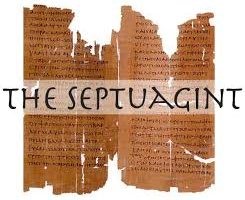
Image from Ancient Faith Ministries.
God etched the 10 Commandments in stone (Exodus 31:18, 32:15-16). God also spoke directly through Moses throughout Israel’s exodus, and his writings were immediately received as the “book of the covenant” from God (Exodus 24:3-7, 33:11; Numbers 11:10-35). The Jews do not refer to their Scriptures as the “Old Testament.” The Hebrew Bible is known as the Tanakh, which is an acronym created from the first letter of each of the three sections of Jewish Scripture. Most Bible scholars agree that Moses wrote the first section of the Hebrew Bible called the Torah, which is typically referred to as the “Law” and includes the first five books of the Old Testament: Genesis, Exodus, Leviticus, Numbers, and Deuteronomy. The second section of the Hebrew Bible is the Neviim, which means “the Prophets.” This section documents the lives of the prophets and their message and includes: Joshua, Judges, Samuel, Kings, Isaiah, Jeremiah, and Ezekiel, and one book containing the 12 Minor (meaning shorter, not less important) Prophets. The third section of the Hebrew Bible is called the Keuvim, which means “the Writings.” This section covers wisdom literature, songs, and miscellaneous stories and includes: Psalms, Proverbs, Job, the Five Scrolls, Ezra/Nehemiah, Chronicles, and Daniel. Jones, How We Got the Bible, 51-56; Doug Powell, Holman QuickSource Guide to Christian Apologetics (Nashville, TN: Holman Reference, 2006), 178-187.
When Moses wrote the Torah, he most likely had and worked with numerous documents that were passed down from generation to generation. Since the Hebrews were aware of their unique role as God’s people, they were motivated to state and document what God revealed to them. They accepted that Moses’ writings were from God because of the many miracles that God performed through Moses, and Moses conducted his ministry openly, not for his benefit, but for the benefit of the people. By the time of Moses’ death, the Israelites recognized and received a functional canon that was a set of authoritative texts that were God’s words that their leaders proclaimed and preserved. Jones, How We Got the Bible, 51-52; Powell, Guide to Christian Apologetics, 180-182.
Similarly, the Hebrews accepted the writings of the Neviim prophets because God gave them a sign, primarily fulfilled predictive prophecy, that authenticated that the prophets spoke for God. In the Old Testament, accurate predictive prophecy was so important that a false prophet was to be stoned (Deuteronomy 18:20). They preserved the messages and histories in the writings of the Neviim prophets to document what God told them and how God interacted with them. After Nehemiah, the canon of the Neviim prophets closed and came to an end. Powell, Guide to Christian Apologetics, 181-182.
The remaining books of the Hebrew Bible/Tanakh were accepted as Jewish Scripture because they were held in high esteem and commentaries were written about them, such as the books of Psalms, Job, and Proverbs. For example, commentaries of these books were found among the Dead Sea Scrolls. Jesus referred to the Hebrew Bible/Tanakh as actual history (Luke 24:44). In addition, the New Testament writers directly (18 of 22 books) or indirectly (4 of 22 books) referred to the persons and events documented in the Hebrew Bible/Tanakh as actual and reliable. Powell, Guide to Christian Apologetics, 182-183.
The Septuagint. The Christian Old Testament, and the Old Testament that Jesus and the apostles read, was based on a Greek translation of the Hebrew Bible called the Septuagint (LXX or according to the 70). Alexander the Great of Greece became the dominant empire in the fourth century BC and Koine Greek became the dominant common language, much like English is today. In 323 BC, Alexander died and his empire was split up into kingdoms. From 285 to 246 BC, Ptolemy Philadelphus, the king of Egypt, commissioned a translation of the Torah into Greek. To do the translation, he contracted Eleazar, the chief priest of Jerusalem. Eleazar brought to Alexandria 6 translators from each of the 12 tribes of Israel. They rounded the total of 72 translators to 70 to establish the name of the new translated Hebrew Bible, the Septuagint. By 200 to 150 BC, the Neviim (the Prophets) and the Ketuvim (the Writings) were also translated, completing the Greek translation of the Hebrew Bible. Later versions also included the apocryphal books, but the Jews rejected the books as part of the Hebrew Bible canon, but still considered them important. By the first century BC, the Septuagint became the standard Jewish Scripture and the basis of the modern-day Old Testament with 39 books. The Septuagint contains the same books as the Hebrew Bible except some of the books are ordered, grouped or named differently. Some of the books are divided into two books, such as 1 Samuel, 2 Samuel, 1 Kings, 2 Kings, 1 Chronicles, 2 Chronicles, Ezra, and Nehemiah. The 12 Minor Prophets are divided into 12 books: Hosea, Joel, Amos, Obadiah, Jonah, Micah, Nahum, Habakkuk, Zephaniah, Haggai, Zechariah, and Malachi. Jones, How We Got the Bible, 47-48, 51-56, 60; Powell, Guide to Christian Apologetics, 178-187.
The Apocrypha. After the completion of the translation of the Hebrew Bible into Greek, other writings called, the Apocrypha, containing the history of the Jews from the time of Malachi (450 BC) to the birth of Jesus were translated as well. These books were important to the Jews, but they were not accepted as part of the Hebrew Bible because they contained some historical and factual errors, and contained teachings which did not agree with the Hebrew teachings. The early Christian church also did not accept them for two main reasons. First, Jesus only recognized the Old Testament by referring to them as the Law, Prophets, and other writings (Luke 24:44). Second, the authors of the New Testament never directly quoted the Apocrypha as Scripture. After on or about 1825, the Apocrypha was largely eliminated from the Bible except in versions authorized by the Roman Catholic Church and the Eastern Orthodox churches. After the Reformation contended that some of the Roman Catholic teachings were not biblical, Rome responded in 1546 at the Council of Trent by declaring that the books were part of the canon of the Bible. The reason these books were included is because they supported the Roman Catholic doctrines that were disputed during the Reformation, such as prayers for the dead, purgatory, and justification by faith plus works. Jones, How We Got the Bible, 49-50, 57-60; Powell, Guide to Christian Apologetics, 177-84, 193.