

HOW DOES GOD DECIDE WHO HE WILL HEAL?
First, before we provide an intellectual answer to the question, “How does God decide who he will heal?” we should empathize with, comfort, and help anyone that is suffering from disease or illness. Second, if we have been created by God who offers us eternal life and a loving relationship with us after we die, then we should consider pain and suffering in light of eternity. Some forms of suffering may simply be an effort on the part of God to develop our character with eternity in mind. Given our limited knowledge and perspective, we may need to patiently endure suffering until God reveals his reasons and purposes for allowing us to experience suffering. J. Warner Wallace, God’s Crime Scene: A Cold Case Detective Examines the Evidence for a Devinely Created Universe, (Colorado Springs, CO: David C. Cook, 2015) chapter 8; Clay Jones, Why Does God Allow Evil?: Compelling Answers for Life’s Toughest Questions, (Eugene, OR: Harvest House, 2017), chapters 2, 6, 10, 11, and epilogue.
Strobel interviewed Douglas Groothuis on his wife’s illness and death, despite many prayers for her healing. Lee Strobel interviewed Douglas Groothuis, PhD, a Christian philosopher, author, and apologist (defender of the Christian faith). They discussed the subject of the book Groothius never wanted to write, Walking through Twilight: A Wife’s Illness-A Philosopher’s Lament, (Downers Grove, IL: InterVarsity, 2017), which chronicles his wife Becky’s affliction with primary progressive aphasia: a progressive, incurable, and invariably fatal brain disease. Strobel, The Case for Miracles, chapter 13, 235-253. Becky eventually died on July 6, 2018. Lee Strobel and Mark Mittelberg, The Miracles Answer Book, (Grand Rapids, MI: Zondervan, 2019), 177. Strobel’s wife, Leslie, also has suffered many years from the debilitating painful neuro-logical disorder disease of fibromyalgia that affects the way pain signals are processed in the central nervous system. Strobel asked many times through prayer, beseeching God for Leslie’s pain relief and healing without any improvement, “But why no miracle for Leslie?” Strobel, The Case for Miracles, 235-236.
Groothuis discussed how Becky’s progressive aphasia progressed to the point where she lost her ability to use words and executive functions-the ability to analyze and perform tasks. The particular cruelty of this disease is that Becky slowly lost her mind and was aware she was slipping away. When Becky despaired, Groothuis told “her to take it one day at a time, to look for the good things in life, to remember that God loves her. … Think of the future, of the world without tears, without curse, when you have a perfect resurrection body and you’ll be face-to-face with God … in the new heaven and the new earth.” She responded with a big smile because, “We have hope, but it’s deferred hope.” Strobel, The Case for Miracles, 240-245.
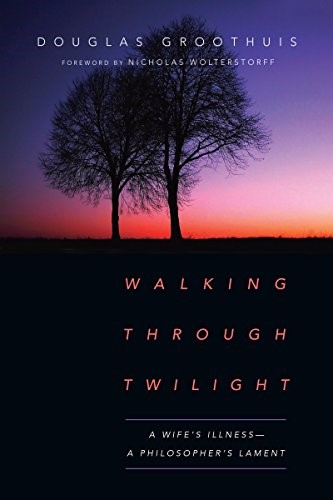
How to deal with God when he does not heal. In regard to Groothuis’ relationship with God in light of Becky’s condition, he “learned to lament. Sixty of the psalms are laments. There’s lament in Ecclesiastes and Job. Jesus laments over the unbelief of Jerusalem. On the cross, his lament came as the cry, ‘My God, my God, why have you forsaken me?’ (Matthew 27:46; see Psalm 22:1). If Jesus can lament and not sin, then I suppose we can. And just as his lament was answered by his resurrection, so ours will be too. Look-God’s world has been broken by sin, and it’s morally and spiritually right to lament the loss of true good. I’m grateful for the lament we see in Scripture-it’s God helping us learn how to suffer well.” Strobel, The Case for Miracles, 245-246. In addition, when Paul suffered from what he called a “thorn … in the flesh” he prayed and asked on three different occasions for it to be removed; however, the Lord’s final answer was that the thorn remain: “My grace is sufficient for you, for my power is made perfect in your weakness.” Paul recognized that his thorn kept him “from being too elated by the surpassing greatness” of the Lord’s “revelations” to him. So he was content with his weakness and suffering for Christ’s sake, and concluded, “For when I am weak, then I am strong” (2 Corinthians 12:7-10 ESV).
God does not tell us why he heals certain people. Groothuis recognized that “We may not know what good God is achieving in the short run, but given the credibility of Christianity and my forty years of experience as Christian, I am justified in believing there can be significance and purpose in suffering. We can’t read the mind of God. We’re not privy to why he chooses to work a miracle in some cases and not others. Yes, it can be agonizing when you’ve prayed and fasted for the healing of a loved one and God seems to have said no or to wait until eternity.“ Strobel, The Case for Miracles, 240. Groothius prays a prayer of relinquishment to trust and accept that God is in control of Becky’s condition. This prayer changes his attitude toward healing by allowing him to feel more like he and Becky are resting in God’s arms. Strobel, The Case for Miracles, 248-251.
Christianity is the best explanation for evil and suffering. From an intellectual perspective, we understand that miracle healings are the supernatural exception to the way the world usually works. Most people will not experience a sudden and complete healing. But that does not mean that God is absent. Strobel, The Case for Miracles, 252. When we consider the worldview possibilities regarding why God does not heal everyone, we realize that according to atheism, the world and suffering are meaningless and there is no purpose in life. Islam believes in a personal God, but not a spiritual savior. Pantheism does not have a God who cares about the plight of people. The first of the four noble truths of Buddhism is life is suffering, and Buddha’s answer is to escape the world and enter nirvana, changing your consciousness and depersonalizing yourself. In Christianity, there is a future, a hope, and a transformed life after death, and a loving and eternal relationship with God in the new heaven and new earth, where there will be no tears and suffering. Christianity has the best explanation for evil and suffering because Christians have the assurance that God will deal with and put an end to evil and suffering for those that trust in and follow God. Strobel, The Case for Miracles, 247-248.