When examining the evidence for miracles, not only should you consider each piece of evidence; you should consider the synergistic effect of how all the pieces of evidence interact to support your conclusion. In other words, the pieces of evidence reinforce one another, producing an effect stronger than any piece of evidence by itself. As stated in this website, the evidence for miracles includes the following.
Scientific studies confirm the effectiveness of intercessory prayer. The peer-reviewed scientific studies on intercessory prayer show that patients that are prayed for achieve better health outcomes than control groups that are not prayed for. The 1988 Dr. Randolph Byrd study published in the Southern Medical Journal showed that patients in the “prayer group had less congestive heart failure, fewer cardiac arrests, fewer episodes of pneumonia, were less often intubated and ventilated, and needed less diuretic and antibiotic therapy.” Strobel, The Case for Miracles, 126-127. A decade later, the Dr. William S. Harris replication “gold standard” study published in the Archives of Internal Medicine again showed that the group that received prayer had better health outcomes than the control group that did not receive prayer. Strobel, The Case for Miracles, 127. The Dr. Candy Gunther Brown PhD peer-reviewed studies in Mozambique, Africa and Brazil published in the Southern Medical Journal on “proximal intercessory healing” of blindness and deafness (or severe vision or hearing problems), which are not particularly susceptible to psychosomatic healings, showed that in Mozambique: “After prayer, we found highly significant improvements in hearing and statistically significant improvements in vision. We saw improvement in almost every single subject we tested. Some of the results were dramatic.” The study in Brazil showed: “Again, sight and hearing were improved after hands-on prayer was offered in Jesus’ name.” Dr. Brown’s studies show that something is going on with proximal intercessory prayer. “This is more than just wishful thinking. It’s not fakery; it’s not fraud. It’s not some televangelist trying to get widows to send in their money. It’s not a highly charged atmosphere that plays on people’s emotions. Something is going on, and it surely warrants further investigation.” Strobel, The Case for Miracles, 133-137. The 2006 Study of the Therapeutic Effects of Intercessory Prayer (STEP) conducted by Harvard Medical School allegedly showed no difference in cardiac patients who were prayed for and were not. The STEP study is not the definitive word on prayer, because it only recruited a group of individuals to pray who have long denied prayer works miracles and have even called petitionary prayers useless. Dr. Brown opined that you cannot draw any conclusions on the effectiveness of traditional Christian prayer from the STEP study, because it involved different inclusion criteria for those praying who were not Christians. Strobel, The Case for Miracles, 128-131. See also Candy Gunther Brown, PhD, regarding her book, Testing Prayer: Science and Healing, (Cambridge, MA: Harvard University Press, 2012).
Miracles in Bible and today. A leading New Testament scholar, Craig S. Keener, has meticulously researched and published a two-volume study/book on miracles and a subsequent more concise updated book that stand as the definitive work on the topic of miracles outside and in the New Testament of the Bible. Strobel, The Case for Miracles, chapters 4-6, 73-117. Keener responded to the modern prejudice against biblical miracle reports that depend on David Hume’s argument that uniform human experience preclude miracles. Yet current research shows that human experience is far from uniform. In fact, hundreds of millions of people today claim to have experienced miracles. Keener’s research indicates that many miracle accounts throughout history and from contemporary times are best explained as genuine divine acts, lending credence to the biblical miracle reports. Craig S. Keener, Miracles: The Credibility of the New Testament Accounts: Volume 1 and Volume 2, (Grand Rapids, MI: Baker Academic, 2011); Craig S. Keener, Miracles Today: The Supernatural Work of God in the Modern World, (Grand Rapids, MI: Baker Academic, 2021). Examples from the case studies he encountered included: “Cataracts and goiters (enlarged thyroid gland)-instantly and visibly healed. Paralytics suddenly able to walk. Multiple sclerosis radically cured. Broken bones suddenly mended. Hearing for the deaf. Sight for the blind. Voices restored. Burns disappearing. Massive hemorrhaging stopped. Failing kidneys cured. Rheumatoid arthritis and osteoporosis-gone. Life given back to the dead, even after several hours.” The accounts were “from around the world-China, Mozambique, the Philippines, Nigeria, Argentina, Brazil, Cuba, Ecuador, South Korea, and other countries. Multiple and independent eyewitnesses with reputations for integrity, including physicians. Names, dates, medical documentation in many cases. There’s even a peer-reviewed scientific study confirming the healing of the deaf. And the timing is usually the most dramatic element-instantaneous results right after prayers to Jesus. Lots of cancer healings too-malignant brain tumors and reticulum-cell sarcoma.” There were many specific documented cases of miracle healings after prayer verified by witnesses, medical reports, diagnostic images, and doctors. He accumulated 350 reports just of people healed of blindness. These documented miracle healings exceeded even the stringent standards required by skeptics. Strobel, The Case for Miracles, 96-113. One purpose of Kenner’s research is to determine whether it is rational to believe that supernatural miracles occur today. His research led him to conclude yes, “It looks like God is still in the miracle business!” His other purpose for his research is to show that it is not necessary to dismiss the New Testament writings as legendary, fanciful, or inaccurate, just because they report miracles. If miracles happen today, there is no reason to suppose that miracles were not possible in the ancient world. Strobel, The Case for Miracles, 114-117.
God does not tell us why he miraculously heals certain people, but does not heal other people. We all recognize that God does not heal everyone from their sicknesses and diseases. God does not reveal the specific reasons why he only heals certain people. God understands that you need to lament when your loved ones and friends die from sicknesses and diseases. It helps to pray a prayer of relinquishment to trust and accept that God is in control. From an intellectual perspective, miracle healings are the supernatural exception to the way the world usually works. Most people will not experience a sudden and complete healing. But that does not mean that God is absent. Strobel, The Case for Miracles, 252.
Christianity has the best explanation for evil and suffering. When we consider the worldview possibilities regarding why God does not heal everyone, we realize that according to atheism, the world and suffering are meaningless and there is no purpose in life. Islam believes in a personal God, but not a spiritual savior. Pantheism does not have a God who cares about the plight of people. The first of the four noble truths of Buddhism is life is suffering, and Buddha’s answer is to escape the world and enter nirvana, changing your consciousness and depersonalizing yourself. In Christianity, there is a future, a hope, and a transformed life after death, and a loving and eternal relationship with God in the new heaven and new earth, where there will be no tears and suffering. Christianity has the best explanation for evil and suffering because Christians have the assurance that God will deal with and put an end to evil and suffering for those that trust in and follow God. Strobel, The Case for Miracles, 240-248. See also Douglas Groothuis, PhD, Walking through Twilight: A Wife’s Illness-A Philosopher’s Lament, (Downers Grove, IL: InterVarsity, 2017).
Miracles in the Bible. Many people do not seriously consider whether the truth claims of Christianity are true because they think that the miracles mentioned in the Bible are unbelievable. For example, Noah’s Ark containing all animals, Moses parting the Red Sea, and Jonah getting swallowed by a whale and spit out after 3 days are impossible. However, since there is clear and convincing evidence that God created the universe and all life, the feasibility of God intervening, suspending natural laws, and performing miracles is at least possible. As the famous Christian (and former atheist) author and philosopher C.S. Lewis stated, “If we admit God, must we admit Miracle[s]? Indeed, indeed, you have no security against it. That is the bargain.” Editors R. Dougles Geivett and Gary R. Habermas, (Downers Grove, IL: IVP Academic, 1997), 71. See also C.S. Lewis, Miracles (New York, NY: Macmillan, 1947), 105-106. The miracles reported in the Bible confirm that God wants to have a relationship with you (Psalm 63:1-6; Hebrews 12:1-2).
God’s creation. Fishnet Bible Stories and Free Bible Images.
God created the heavens, earth, and life (Genesis 1:1–2:25). The scientific and philosophical evidence and arguments clearly and convincingly establish that God created the universe and life. See the Does God exist? page of this website. Therefore, we know that God is eternal, uncaused, timeless, nonmaterial, powerful, intelligent, intentional, logical, conscious, and personal. God created you (Psalm 139:13-14) and loves you (John 3:16; 2 Peter 3:9). God wants to have a relationship with you (Psalm 63:1-6; Hebrews 12:1-2) before and after you die (John 17:3).


Jesus performed many nature, creation, and physical and spiritual healing miracles.
You must be spiritually perfect to have an eternal relationship with God (Isaiah 59:2; Mark 4:22), but you are not spiritually perfect (Psalm 14:1-3; Romans 3:10, 23; James 2:10). God does not weigh your good deeds against your bad deeds/sins (Galatians. 3:11; Romans 3:28, 10:3). Your good deeds are like filthy rags to God (Isaiah 64:6). God requires a sacrifice to satisfy his judgment for your bad deeds/sins (Deuteronomy 17:1). God promised a New Covenant: God would offer a perfect and final sacrifice, forgive mankind’s inequity, and remember mankind’s bad deeds/sins no more (Jeremiah 31:31-34).
God states there is no greater love than sacrificial love (John 15:13). So God became human in the form of Jesus to sacrifice himself as the perfect and final sacrifice for you (Philippians 2:7). Jesus performed many miracles to prove he is fully God and fully human, and has authority to forgive your bad deeds/sins and make you spiritually perfect in God’s presence.
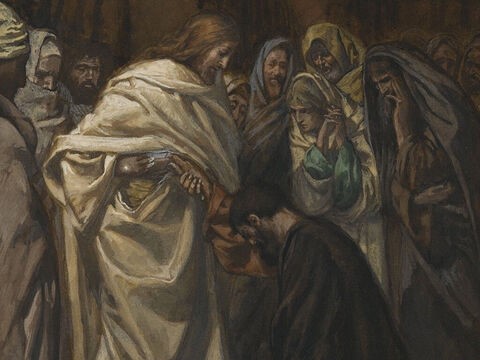
Doubting Thomas touches Jesus’ wounds and believes. Free Bible Images.
For example, Jesus appeared to 11 apostles. Thomas was present, doubted, touched Jesus’ nail marked hands and wound in his side, and believed in Jesus (Mark 16:14; John 20:24–31). The ultimate spiritual miracle is that Jesus died for your spiritual brokenness and rose from the dead. He even appeared to doubters to prove he was resurrected and had the power to transform you so you can have an eternal loving relationship with God. Jesus’ sacrifice is a perfect sacrifice for your bad deeds/sins (Ephesians 1:7; 1 Peter 2:24; 1 John 1:7; Revelation 1:5-6). It is also a final sacrifice for your past, present, and future bad deeds/sins (2 Corinthians 5:21).
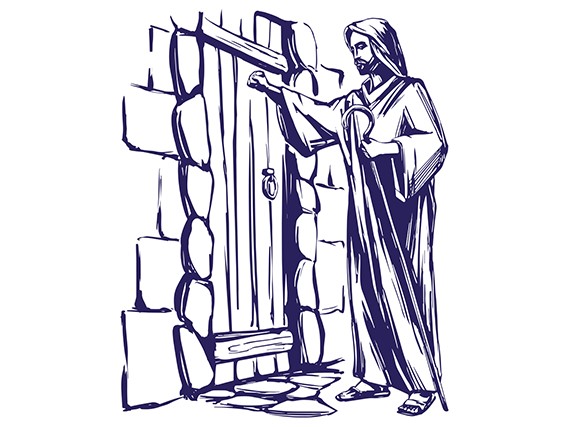
Your personal spiritual miracle. But God will not force himself on you. Jesus knocks on the door of your spiritual life, but he will not come into your life unless you let him in (Revelation 3:20). If you believe in and trust Jesus as being fully God and fully human, God will perform the ultimate miracle in your life by transforming you to be spiritually perfect like Jesus so you can have an eternal relationship with God today, every day, and for eternity.
All you have to do is to admit you are spiritually broken and receive and follow Jesus. Specifically, you must be humble, repent (change your mindset) of your bad deeds/sins, admit you are not perfect, and need God’s perfect and final sacrifice (Romans 10:9-10; Acts 17:30; 26:20). Then you must accept God’s sacrifice as a gracious gift from God (Ephesians 2:8-10; Titus 3:5).
The above evidence for miracles establishes by clear and convincing evidence that God performs miracles. Most importantly, God wants to perform a spiritual miracle in your life so you can have an eternal loving relationship with God. Will you allow God to come into your life and spiritually transform you?